Agent observability is becoming a customer product
As AI systems take multi-step actions, logs and traces are no longer only engineering tools. They are part of the explanation customers need when a system acts on their behalf.

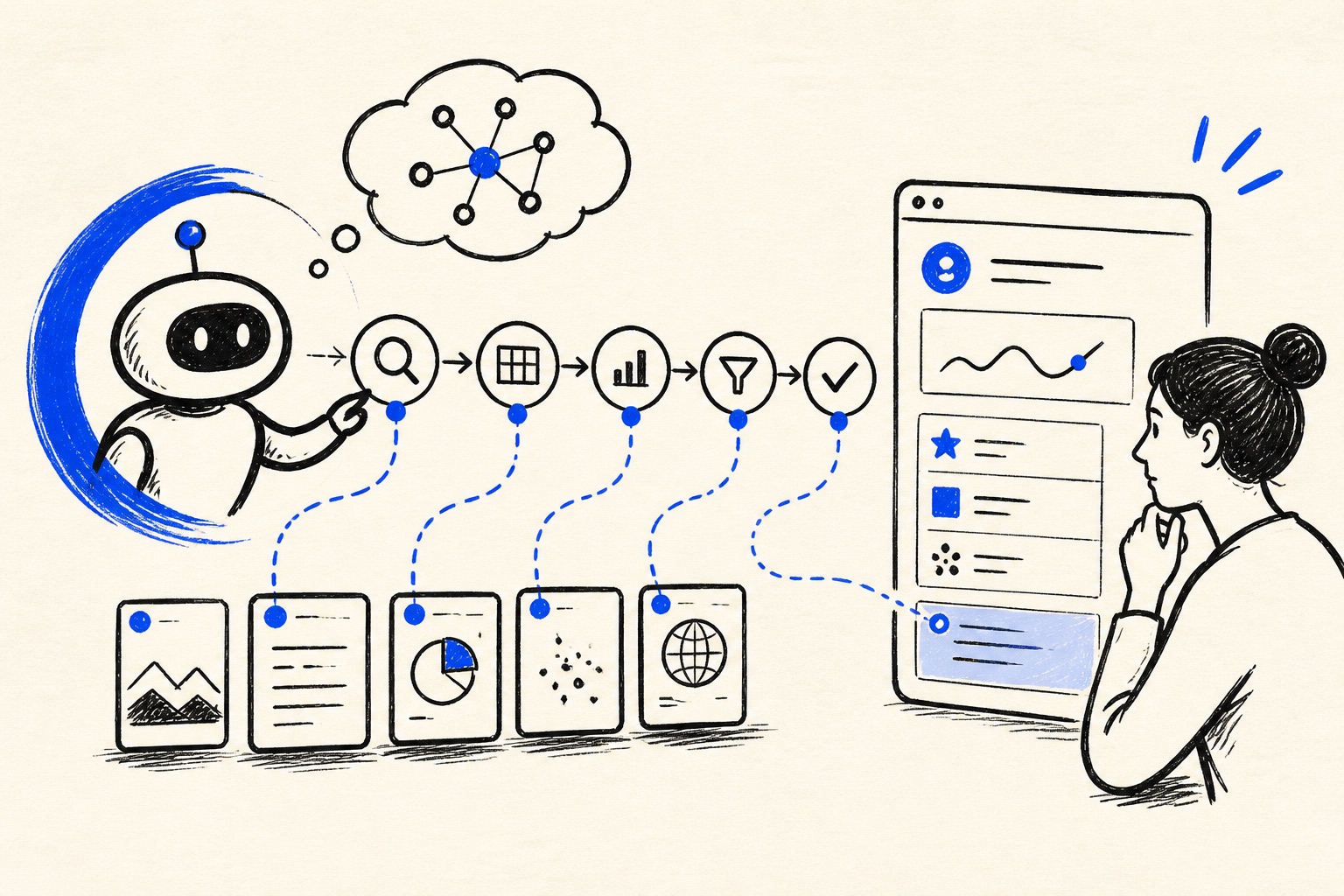
A simple chat interaction can be difficult enough to explain. An agent that retrieves information, calls tools, drafts a response and changes a record creates a more demanding accountability problem. When something goes wrong, the company needs to know what the system saw, which steps it took and where a person could have intervened.
That is usually described as observability. As agents become customer-facing, it should also be considered product design. The right visibility can help a customer understand an action, correct a mistake and trust that the system is not operating as an opaque substitute for responsibility.
A trace should answer a human question
Engineering teams need detailed telemetry to diagnose performance and system failures. Customers need a clearer account: what did the agent do, what information did it use and what can be changed now? The product should not expose every internal event, but it should offer enough evidence for a reasonable person to understand the action that affected them.
This is particularly important when an agent makes a recommendation, routes a request or updates a shared record. A user should be able to see the source material, challenge an assumption and reach a human owner where necessary. Visibility is useful when it leads to an actual path for correction.
Logs can reveal a weak process before a failure
Agent traces often show more than technical errors. They can reveal that a workflow relies on missing data, unclear policies or a tool that does not have the authority required to complete a task. Those signals give a company a chance to improve the underlying process rather than merely adjusting a prompt after a visible mistake.
The strongest teams will review traces with the people who own the operation. A technical explanation may identify the sequence of actions, while a frontline employee can explain why the sequence was inappropriate in the real world. Together, they create a more useful feedback loop.
Transparency must respect security and privacy
More visibility is not always better if it exposes sensitive internal instructions, personal data or security controls. Product teams need to decide what each audience should be able to see and how the records are stored. A customer-facing explanation can be clear without revealing every implementation detail.
The balance is not a reason to keep everything hidden. It is a reason to design different views for different responsibilities. The customer needs understandable evidence. The operator needs diagnostic detail. The security team needs a record that supports investigation without expanding unnecessary access.
An agent is more trustworthy when its actions can be followed
Observability should help a company improve a system and help a customer understand what happened. When those two goals meet, a trace becomes more than a log. It becomes part of a responsible product relationship.