The AI capital expenditure era will be judged by utilization
The next question for investors is not how much capacity was announced. It is whether expensive infrastructure is producing durable, paid work.

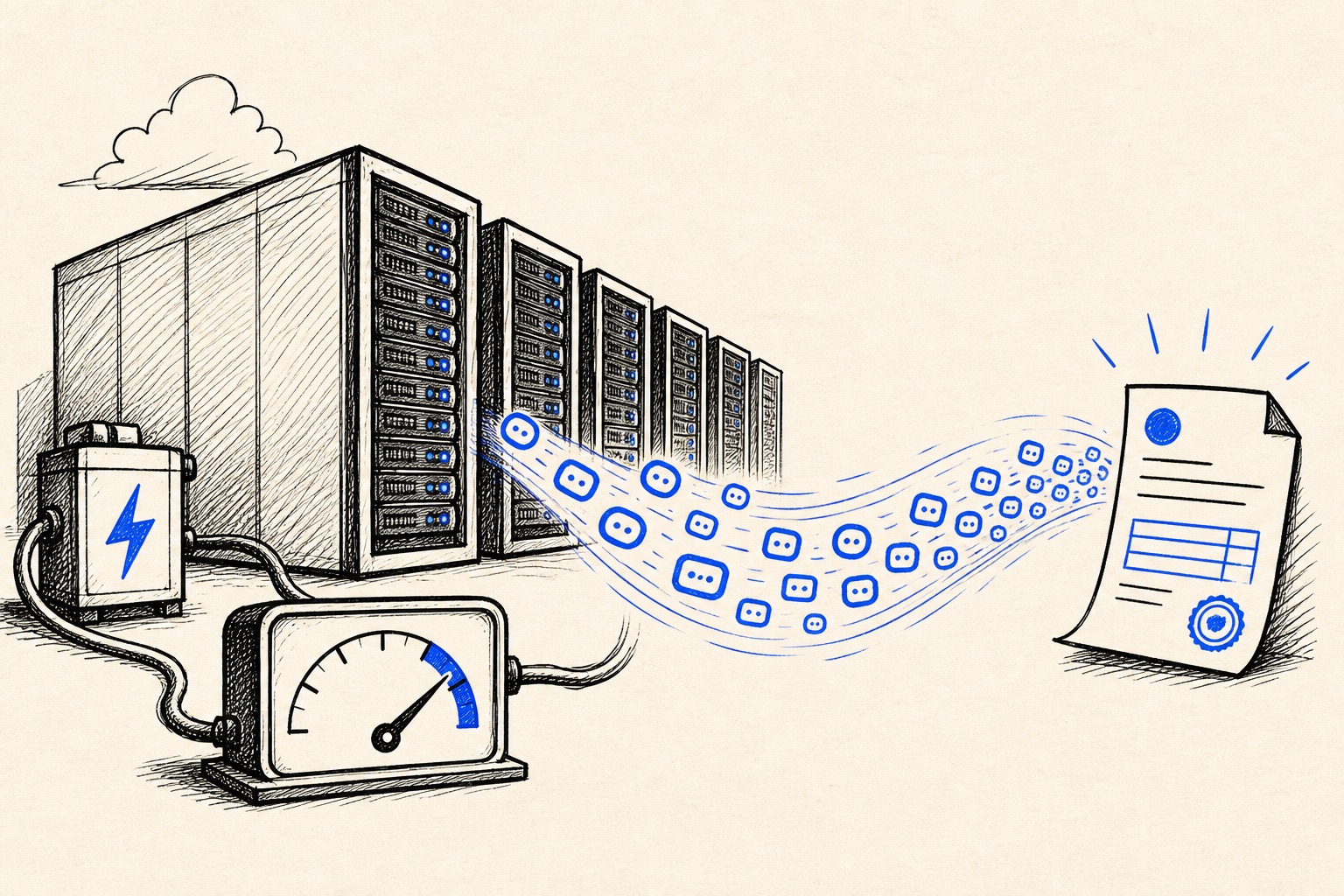
AI spending has made capital expenditure a daily business story, but the most useful measure is still surprisingly ordinary: how much of the new capacity is doing work that customers will pay for again. The difference between installed hardware and useful output is where the next phase of the market will be decided.
That is not a narrow accounting distinction. Utilization determines gross margin, lease economics, power planning and the credibility of every growth forecast built on the assumption that demand will keep arriving. Investors can learn more from a disciplined view of workload quality than from another headline about the size of a cluster.
A reservation is not a workload
Capacity announcements commonly combine several moments that should be separated. A site can be planned, land can be controlled, chips can be ordered, racks can be installed and a customer can reserve future access. None of those steps proves that a system is processing a sustained paid workload at the economics implied by an investor presentation.
The practical question is whether demand survives contact with price, latency, reliability and the customer’s own implementation work. A buyer may reserve capacity while experimenting with a product, then use far less than expected once a model is in production. The businesses that report both contracted demand and realized consumption will give the market a clearer signal.
Utilization has a quality problem
Not every busy accelerator creates the same value. Training runs can fill equipment for a period, while inference demand may be more recurring but more sensitive to unit costs, response time and customer churn. Internal research workloads can be strategically important without producing direct revenue. Each category matters, but mixing them together obscures the economic question.
A useful framework asks who is using the capacity, how predictable the workload is and what happens when the customer’s budget tightens. Short promotional bursts and subsidized experiments can make a utilization chart look healthy. Renewal behavior, usage after a product launch and willingness to pay for higher reliability are harder to fake.
The physical constraints still set the pace
A capacity plan can also look stronger on paper than it does at the socket. Power delivery, cooling, networking and qualified operations staff all determine how much hardware can run at its intended density. A delayed transformer or network bottleneck may turn an expensive asset into a partially useful one, even when the chips themselves are on site.
That makes utilization an operational measure as much as a commercial one. Investors should follow energy contracts, commissioning schedules, achieved uptime and the time required to bring each new cluster online. The company that learns to turn equipment into available service quickly has an advantage that cannot be seen by simply counting accelerators.
The margin story comes after the workload arrives
Revenue from AI capacity is only the start of the analysis. Power costs, depreciation, financing, support and customer concentration all shape the return on each unit of compute. A full data center can still be a poor business if it is filled with low-margin work, heavily discounted contracts or customers that can leave once a competing provider cuts price.
The mature market will reward providers that can explain their mix of workloads and the economics of serving them. That means separating one-time model development from recurring inference, showing where price is stable and acknowledging where a contract carries unusual service obligations. Clarity will become more valuable as infrastructure growth makes simple scarcity a less complete explanation.
Capacity becomes a business only when it is repeatedly useful
The strongest AI infrastructure companies will not be defined solely by the scale of their buildout. They will be defined by the discipline with which they convert expensive physical systems into reliable, recurring customer work. Utilization is where the grand narrative of AI investment meets the ordinary arithmetic of a durable business.