AI culture is built through everyday practices
A company’s real AI culture is not found in a launch memo. It is visible in how people share prompts, challenge outputs, report mistakes and decide what is safe to try.

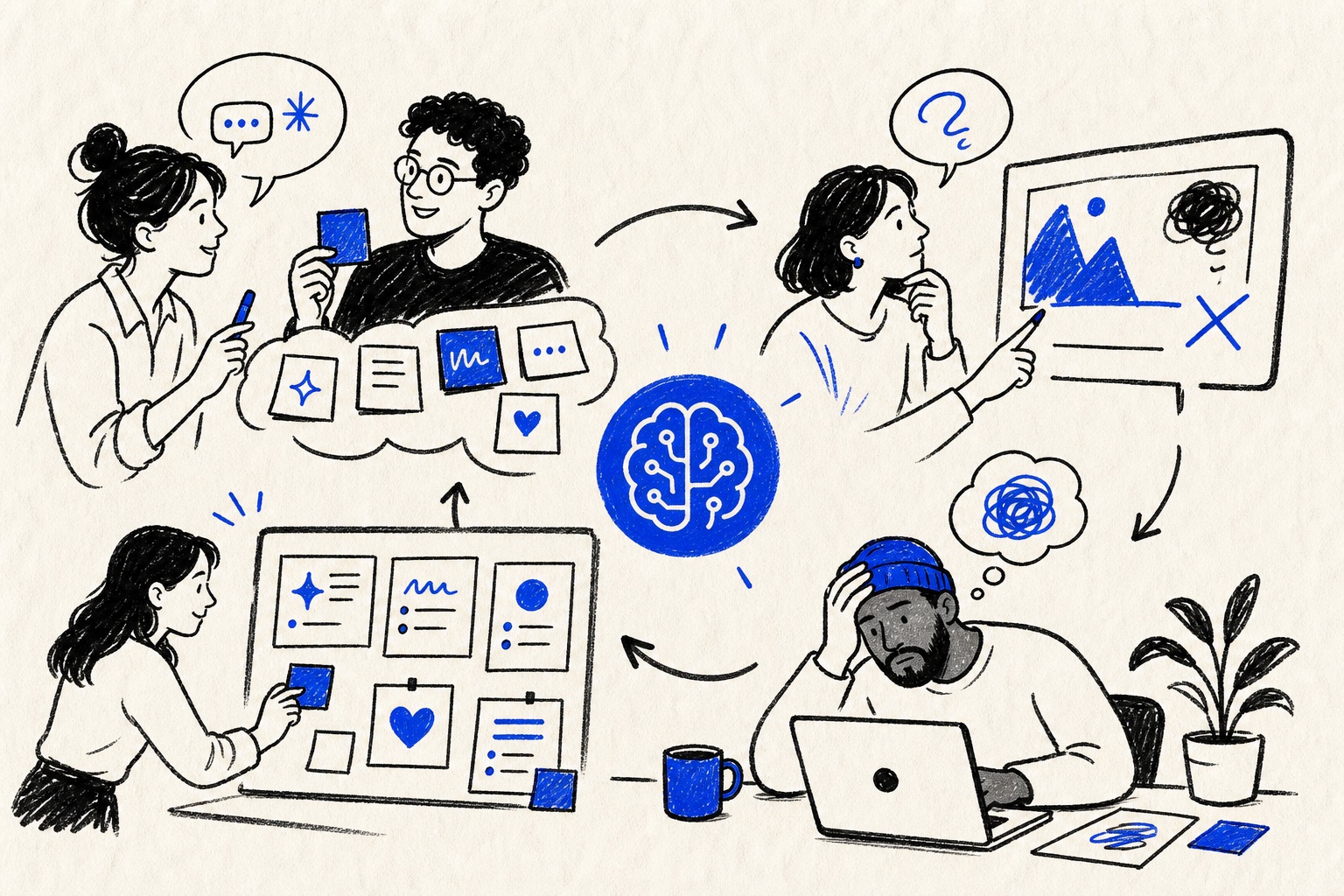
Organizations often describe AI culture as a matter of leadership vision or formal training. Those things matter, but culture is built through the small repeated actions that show people what is actually rewarded. Do colleagues share a useful method, ask where an answer came from and admit when a tool produced a mistake?
The answers shape whether AI becomes a source of thoughtful experimentation or a private productivity hack that nobody can learn from, govern or improve.
Shared practice is more useful than secret expertise
When employees discover a helpful prompt or workflow, they may keep it to themselves because it feels like a personal advantage. That can create short-term efficiency but prevents the organization from building a common standard. Sharing examples, limits and lessons allows a team to improve the method together and reduces repeated experimentation.
The sharing needs a home and an owner. A simple library of approved patterns, use cases and cautions can be more useful than a large training program that quickly becomes outdated. The goal is to make good practice easy to find at the moment someone has a real task.
Challenge should be normal, not adversarial
A healthy AI culture makes it acceptable to ask whether an output is supported, whether a source is current and whether a task should be handled differently. These questions are not resistance to technology. They are the practices that keep a capable tool from becoming a source of quiet errors.
Leaders can encourage this by discussing examples openly, including mistakes that were caught before they caused harm. When people see that questioning a system is expected, they are more likely to report a concern early instead of working around the tool until a larger problem emerges.
Culture needs permission to stop
Experimentation is important, but not every experiment should scale. Teams need permission to pause a use case that is not producing value, that creates too much review burden or that does not fit the organization’s standards. This protects attention and makes future pilots more credible.
Stopping work can also reveal a better opportunity. A failed experiment may show that the data was not ready, the workflow was wrong or the customer need was different from what the team assumed. A culture that can learn from that result is more mature than one that treats every AI project as a test of enthusiasm.
Culture is the operating environment around the model
The quality of an organization’s AI culture will be visible in its everyday habits of sharing, questioning and learning. Those habits determine whether technology becomes a reliable capability or a collection of isolated experiments.