Energy contracts may become the next compute moat
As rack density rises, the commercial edge in AI infrastructure is moving upstream to power access, contract design and the ability to operate inside real grid constraints.

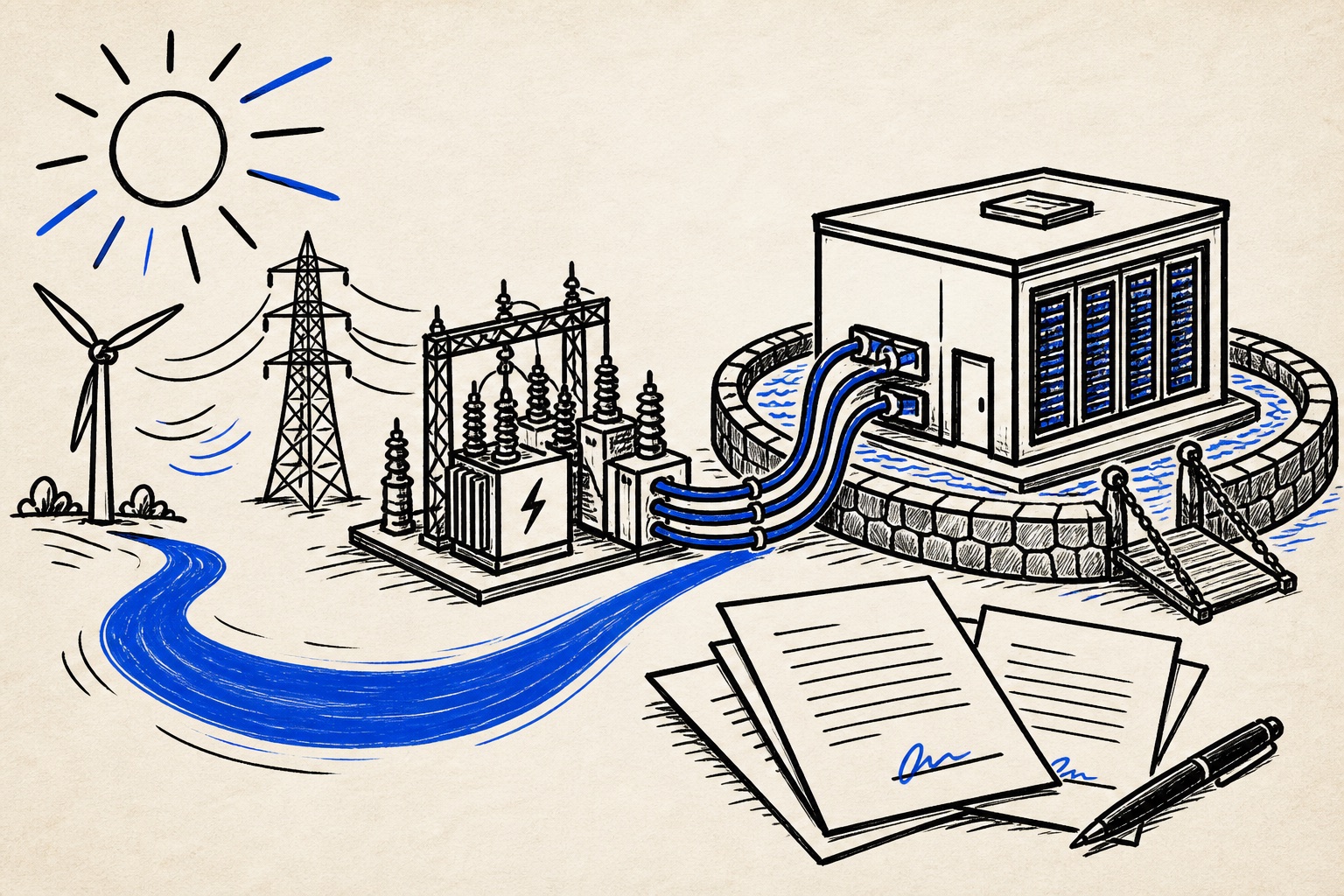
The computing story is increasingly an energy story. A model can be brilliant, a chip can be scarce and a data center shell can be complete, yet none of it produces service if power cannot be delivered where and when the machines need it. That simple constraint is reshaping the commercial map of AI infrastructure.
The important advantage is not merely access to cheap electricity. It is the ability to structure contracts, grid relationships and operating plans that keep capacity available through changing demand, regulation and weather. In a market where every operator wants more power, the details of the agreement may matter as much as the headline megawatt figure.
Location is becoming a product decision
For years, data center location was often discussed through tax policy, fiber routes and real estate. AI changes the weighting because high-density deployments create a much sharper demand for reliable power and cooling. A market that looks attractive on a map may have a long interconnection queue, constrained transmission or equipment lead times that change the economics of a project.
That means the best site is not necessarily the one with the lowest published energy price. It is the one where an operator can obtain firm capacity, complete the required grid work and match its generation profile to the customer workloads it expects to serve. These are commercial decisions with engineering consequences, not just engineering decisions with a budget line.
Contract structure determines who carries the risk
An energy agreement can shift price volatility, curtailment risk and development risk among a utility, generator, data center operator and customer. A low initial price may look appealing until an operator discovers it has taken on exposure to a congested market or a commitment that does not match the way its customers actually use compute.
AI providers will need more sophisticated views of their load. Training, batch inference and real-time services have different tolerance for interruption and different value per unit of time. The ability to schedule flexible work around power conditions can become a source of margin, while latency-sensitive workloads may justify more expensive firm supply.
Flexibility is valuable only when the product can use it
There is an appealing vision of AI workloads shifting automatically to wherever energy is abundant. Some workloads can do that, particularly batch jobs with clear deadlines. Others cannot. A customer asking for a real-time response does not care that a provider found a cheaper hour of electricity in another region if the service is slower or unavailable.
The useful distinction is between operational flexibility and product flexibility. Infrastructure teams can create options through software, batteries, redundant sites and contract design. Product teams then have to decide which customers can benefit from those options and how transparently the tradeoff is communicated. The moat comes from joining those decisions, not from claiming that every workload is movable.
Grid relationships will reward credible operators
Utilities and regulators are being asked to support unusually large new loads while maintaining service for homes and existing businesses. Operators that arrive with uncertain demand forecasts, incomplete construction plans or vague ideas about efficiency make that job harder. The companies that can document their needs and work through local constraints may move faster than competitors with louder announcements.
This is why energy strategy should sit close to product and finance leadership. It affects where services can be offered, what they cost, how quickly capacity can scale and which customer promises are realistic. The industry will need more than clean power claims. It will need operating plans that make sense to the systems supplying that power.
The power agreement is becoming part of the AI product
Compute is often treated as a technical input, but its availability increasingly depends on the patient work of energy procurement and grid coordination. The operators that make power a core commercial capability will have more room to price, plan and serve customers when the market gets tighter.