AI governance has to become a product, not a committee
A policy group can set direction. Employees still need practical tools, clear choices and a visible way to get help when an AI use case is uncertain.

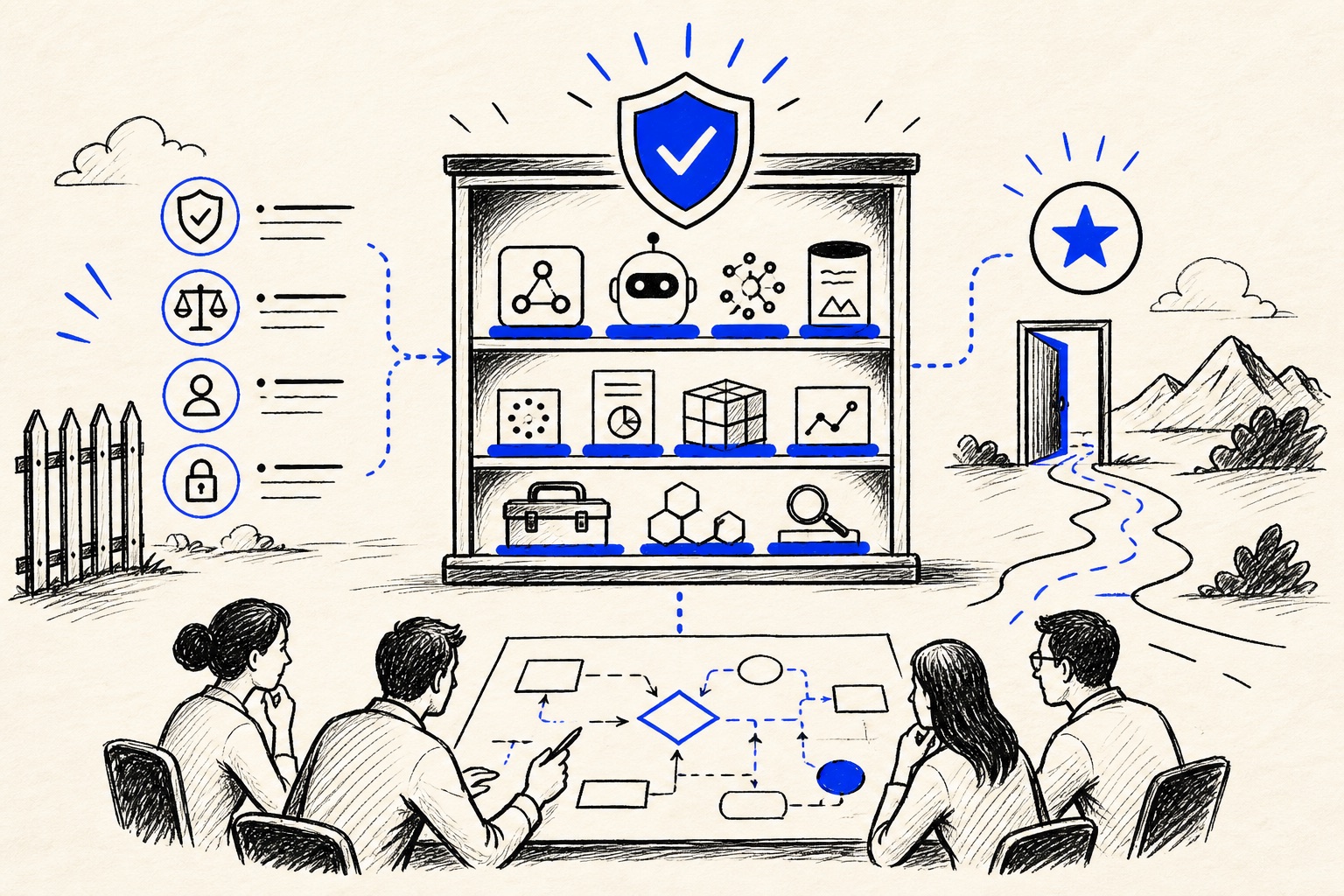
Many organizations have formed an AI committee, drafted a policy or approved a small list of tools. Those are sensible first steps. They do not by themselves tell an employee what to do when a customer asks for an AI-generated analysis, when a team wants to connect a new data source or when a model produces an uncertain result.
Governance becomes useful when it behaves like a product. It should make the safe path easier to find than the unsafe one, give people understandable guidance and create a quick route for decisions that do not fit the standard rules.
Policy needs a practical interface
Employees rarely make decisions by reading a long policy document at the moment of work. They need simple answers: which tools are approved, which data can be used, what review is required and who can answer an exception. A governance program should turn those questions into accessible guidance inside the systems people already use.
This does not mean reducing complex risk to a traffic-light label. It means giving common situations a clear default while making the reasoning behind the default available to the people who need more detail. A usable policy encourages good judgment because it respects the conditions under which judgment is actually made.
The exception path is a measure of maturity
Every useful governance program will encounter work that does not fit a standard category. A customer-facing tool may involve sensitive data, a regional team may face a different legal requirement or a new product may create a risk that was not anticipated. The organization needs a route to evaluate these cases without forcing every decision into an endless committee cycle.
That route should have owners, time expectations and a record of the decision. When an exception is approved, the reasoning can improve future guidance. When it is rejected, the team should understand what would need to change. Governance is more credible when it teaches the organization how to make a better next request.
Measurement turns governance into an operating system
A company should know which approved tools are being used, where higher-risk workflows are emerging and what kinds of questions employees keep asking. Those signals reveal whether the program is helping people or simply pushing activity into informal channels that are harder to see and support.
The goal is not surveillance for its own sake. It is to learn where guidance is unclear, where training is needed and where the organization is taking on risk without realizing it. A governance product improves through the same feedback loop as any other product: real use, observed friction and deliberate iteration.
Good governance makes responsible action easier
Committees can set the standard, but employees need a system they can use. The companies that turn governance into clear tools, fast decisions and practical learning will move with more confidence than those that rely on policy alone.