AI infrastructure is becoming a civic question
Data centers, power demand and digital capacity now affect communities as directly as many traditional infrastructure projects, which means the public conversation has to become more concrete.

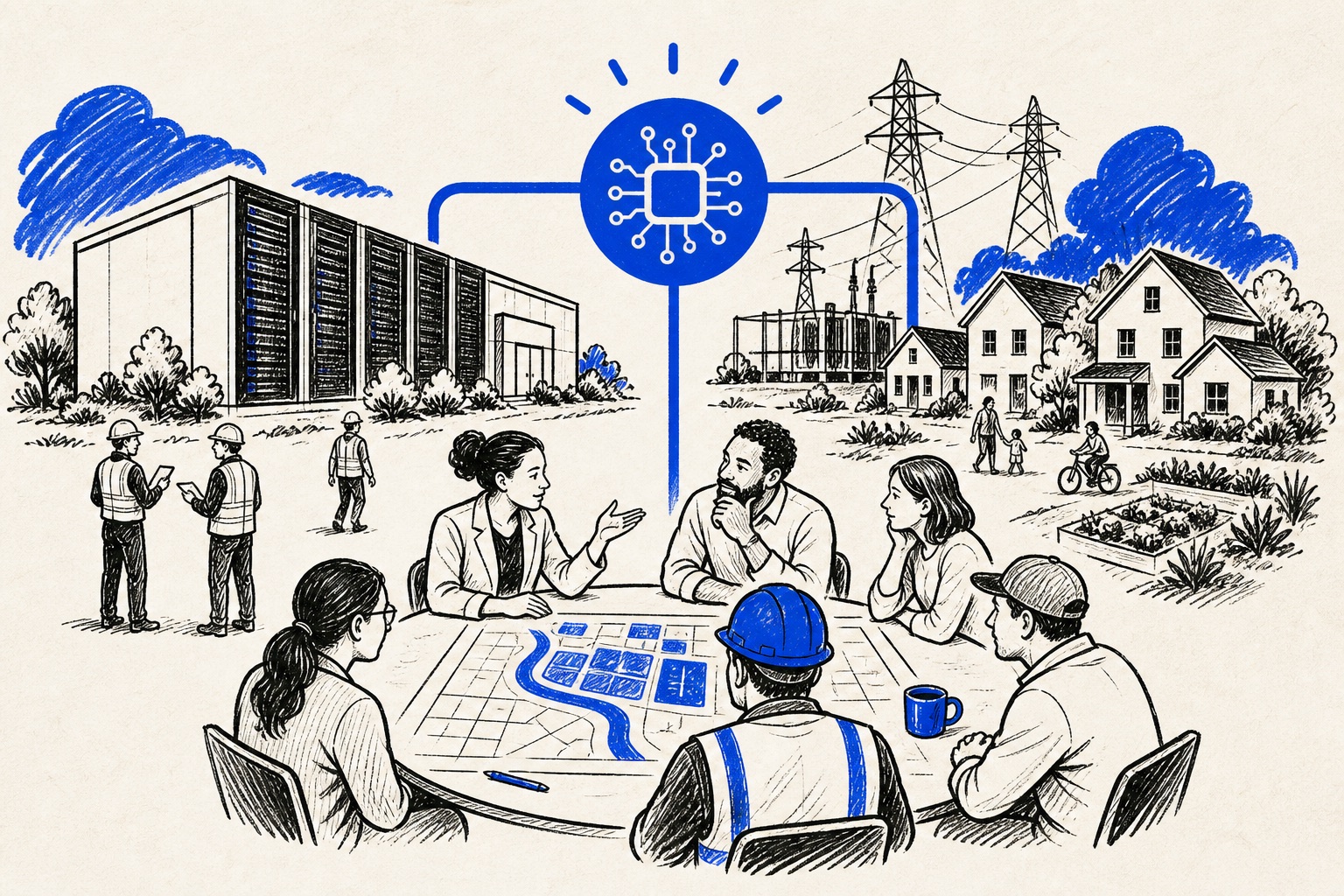
AI is often presented as a cloud service, but the cloud has a physical footprint. It requires land, power, water, fiber, equipment and people who operate the systems around it. As demand grows, communities will face practical questions about what they receive in return for hosting this new infrastructure.
Those questions should not be reduced to a simple choice between progress and opposition. A serious civic conversation can ask how projects are planned, how resources are used, what jobs and skills are created and whether the benefits are shared in a way that matches the demands placed on a region.
The public deserves an understandable account of demand
Large infrastructure projects can be described in technical terms that make it difficult for a community to assess the real impact. Residents need clear information about expected power use, water conditions, construction timing and the role the facility will play in local systems. Vague assurances do not create trust when the project is visibly large.
Operators and public leaders should also explain how demand may change over time. A facility built for one type of workload can evolve as technology and customer behavior change. Transparency about those scenarios helps communities evaluate a project as a long-term relationship rather than a one-time announcement.
Local benefit needs to be more than a press release
A data center may create construction work and support local suppliers, while employing a smaller permanent workforce than other large projects. That makes workforce development, infrastructure investment and local partnerships especially important. The community should be able to see a credible path from the project to skills and opportunity that remain after construction ends.
This is not a demand that every facility solve every local economic challenge. It is a request for honesty about the business model and a thoughtful plan for how the project connects to the place where it operates. Concrete commitments are more useful than broad promises of innovation.
Civic legitimacy supports commercial durability
Companies sometimes treat community engagement as a hurdle to clear after a site has been selected. In reality, it can determine whether a project has a stable future. A facility that is understood, well-managed and connected to regional priorities is less likely to face the kind of opposition and delay that make investments unpredictable.
The same is true for governments. Clear standards for siting, reporting and resource use can give responsible operators more confidence to invest while protecting communities from opaque arrangements. Good public rules are not the enemy of infrastructure. They are part of the conditions that make it durable.
The infrastructure behind AI needs a social license to operate
AI capacity will shape real places and shared resources. The industry and public sector have an opportunity to build that capacity with more transparency, clearer local benefit and a stronger understanding of the civic responsibilities that come with it.