AI insurance is becoming a market for operational evidence
As companies deploy AI in customer and internal workflows, insurance will depend less on broad promises of safety and more on proof that a system is monitored, bounded and recoverable.

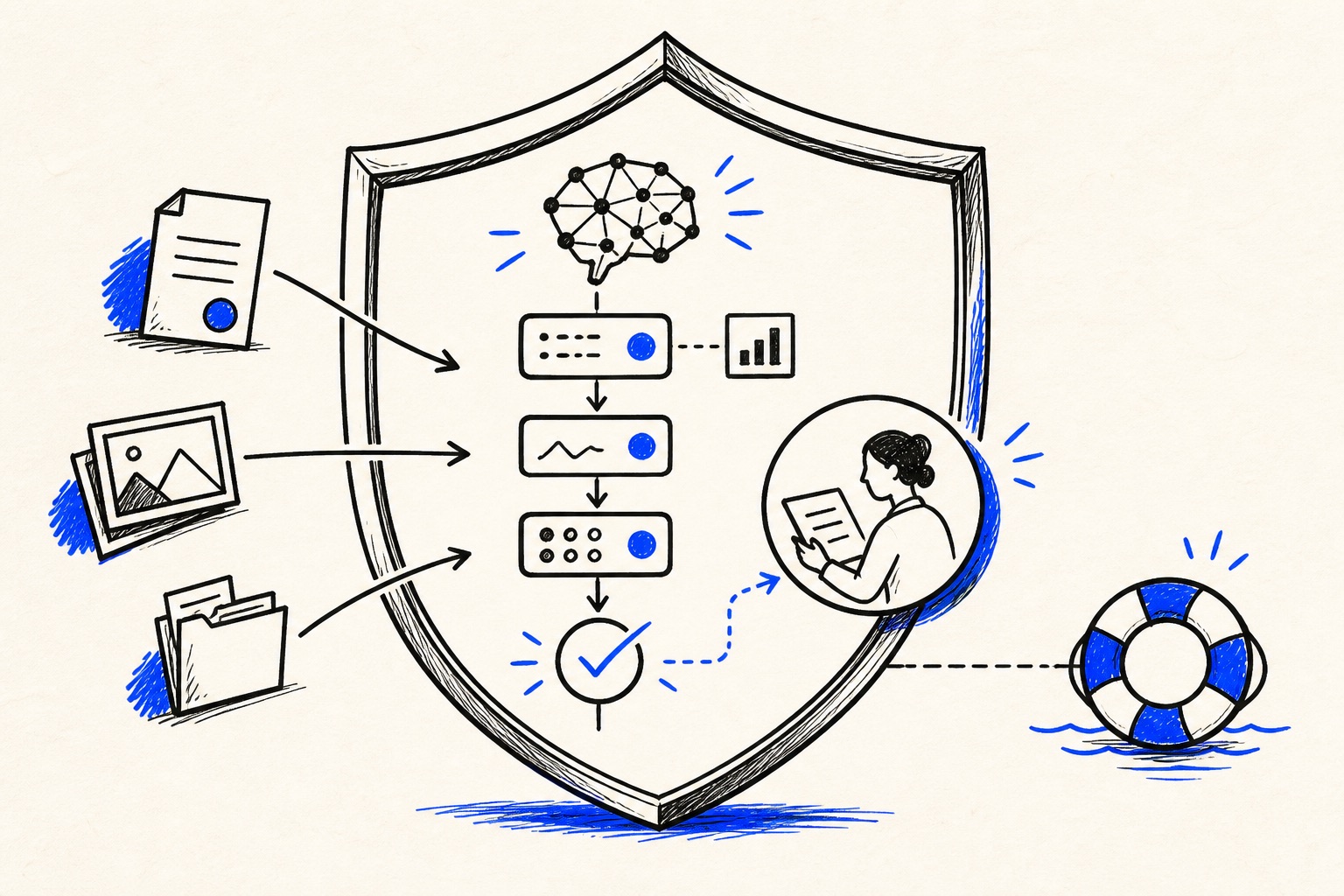
Insurance markets are built around the ability to describe risk, observe behavior and price uncertainty. AI introduces new versions of familiar problems: errors in automated decisions, data exposure, service interruption and customer harm. The most useful response will not be a generic policy labeled AI. It will be a better record of how a system operates.
That is already changing the conversation between insurers, brokers and technology buyers. The key question is becoming whether a company can show where AI is used, what controls apply and how the organization responds when the output is wrong. Operational evidence may become as important as the model choice itself.
Risk begins with the use case
A model used to summarize internal meeting notes presents a different risk from a system that drafts customer communications, recommends a financial action or routes an urgent request. Treating all AI use as one category makes underwriting less precise and can encourage businesses to hide the very details that would make a useful assessment possible.
Companies should map the workflow before discussing coverage. Who receives the output, what decision follows, what information enters the system and what happens when the output is uncertain? Those questions make it possible to distinguish low-stakes productivity assistance from an automated process that needs stronger safeguards.
Controls need to be visible in ordinary operations
A written policy is useful, but insurers will increasingly care about evidence that the policy changes behavior. That includes access controls, review requirements, retained logs, escalation paths and a process for updating a system when the model or data changes. The control is credible when it is part of daily operations rather than an artifact created for a questionnaire.
This may sound burdensome, yet many of the same practices improve the product. Clear ownership and reliable records make it easier to diagnose a complaint, train a new team member or decide whether a workflow should expand. Risk management becomes more valuable when it also makes the business easier to run.
Incident response is the real confidence test
Every complex system will produce an unexpected result. The important question is whether the organization can detect the problem, stop the harmful behavior, communicate clearly and learn from the event. A company that cannot answer those questions will struggle to persuade an insurer that its AI risk is understood.
The response plan should include the human side of the event. Customers and employees need to know how to reach a responsible person, what has been affected and how a decision will be revisited. Technical containment matters, but trust is often rebuilt through the quality of the explanation and the speed of the follow-up.
Coverage will follow better measurement
The insurance market will mature as it sees more loss data and more consistent ways to describe AI controls. In the meantime, businesses that can provide structured evidence may earn better conversations with underwriters than those that rely on broad assurances that their tools are responsible or secure.
That creates an incentive to measure the operational facts that matter: error patterns, human overrides, data access, recovery time and customer impact. These are not merely compliance metrics. They are the language through which a young market will learn which AI deployments are resilient enough to insure.
AI risk is becoming legible through the way a company works
The emerging insurance market will reward organizations that can show their AI systems are bounded, monitored and supported by accountable people. The strongest signal is not a slogan about safety. It is a credible operating record.