AI memory is becoming a product design decision
Remembering user context can make an AI service useful. It can also create surprise, privacy risk and a confusing sense of what the system knows.

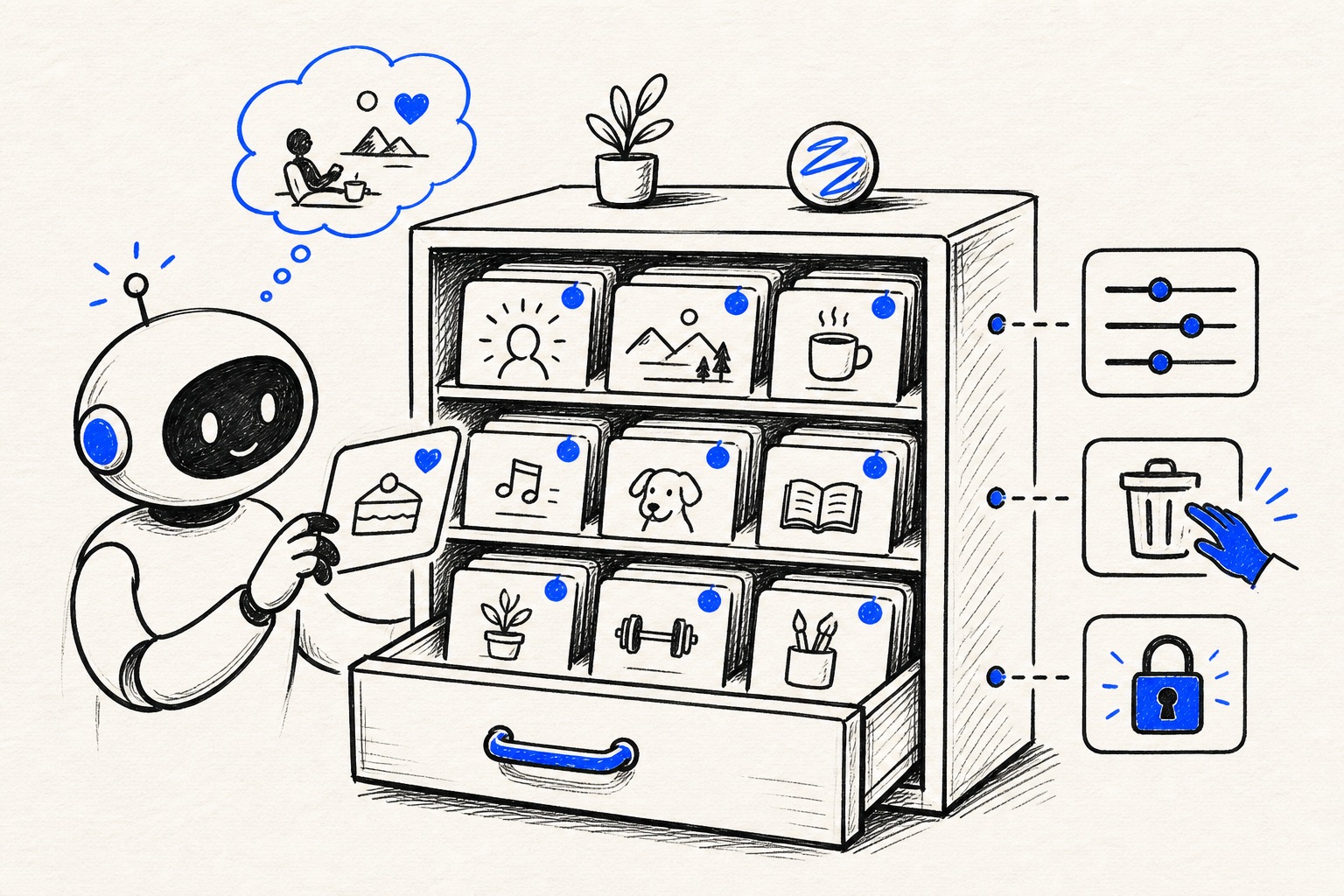
An AI service that remembers preferences, prior work and important context can feel far more useful than one that starts over every time. The same feature can feel unsettling when the user does not understand what was retained, how long it remains or how it influences a new response.
Memory is therefore not a simple technical upgrade. It is a product decision about consent, control and the relationship between a user and a system that may be present across many moments of their work.
Useful memory should be specific and explainable
The strongest memory features are tied to a clear purpose. A system may remember a preferred format, an approved vocabulary or the status of a project because that information helps the user avoid repetitive setup. The user should be able to see the benefit and understand why the context is relevant to the current task.
Problems begin when the system stores broad personal or organizational information without a clear reason. More context is not automatically better. It can create irrelevant responses, increase exposure and make it difficult for a user to predict what the system will do. Purposeful limits are a product advantage.
Control has to be available at the moment it matters
Privacy controls buried in an account menu are not enough. A user needs a practical way to inspect, correct or remove remembered information when it affects an answer. They also need language that makes the choice understandable without requiring a technical explanation of storage architecture.
For organizational products, control includes the administrator as well as the individual. Companies need to decide which knowledge belongs to a team, which belongs to a person and which should expire when a project or employment relationship changes. These are governance choices that shape whether memory becomes a trusted capability.
Memory changes the consequences of an error
A mistaken answer from a stateless tool can be frustrating. A mistaken answer from a system that claims to know the user can be more damaging because it suggests that the stored context itself is wrong or has been misused. Teams should test memory features for relevance, persistence and the way an error can spread across future interactions.
The responsible design is not to avoid memory. It is to make it bounded and revisable. A product should forget when forgetting is appropriate, show its work when remembered context matters and give people a meaningful way to remain in charge of their own information.
Memory earns trust when it feels like assistance, not surveillance
AI products become more useful when they retain the right context. They become more trustworthy when users can see, shape and remove that context without friction. The distinction will define the products people keep using.