AI is changing the middle manager job before it eliminates it
The first managerial shift is not fewer people. It is a new expectation that managers can turn scattered work into clearer decisions, feedback and follow-through.

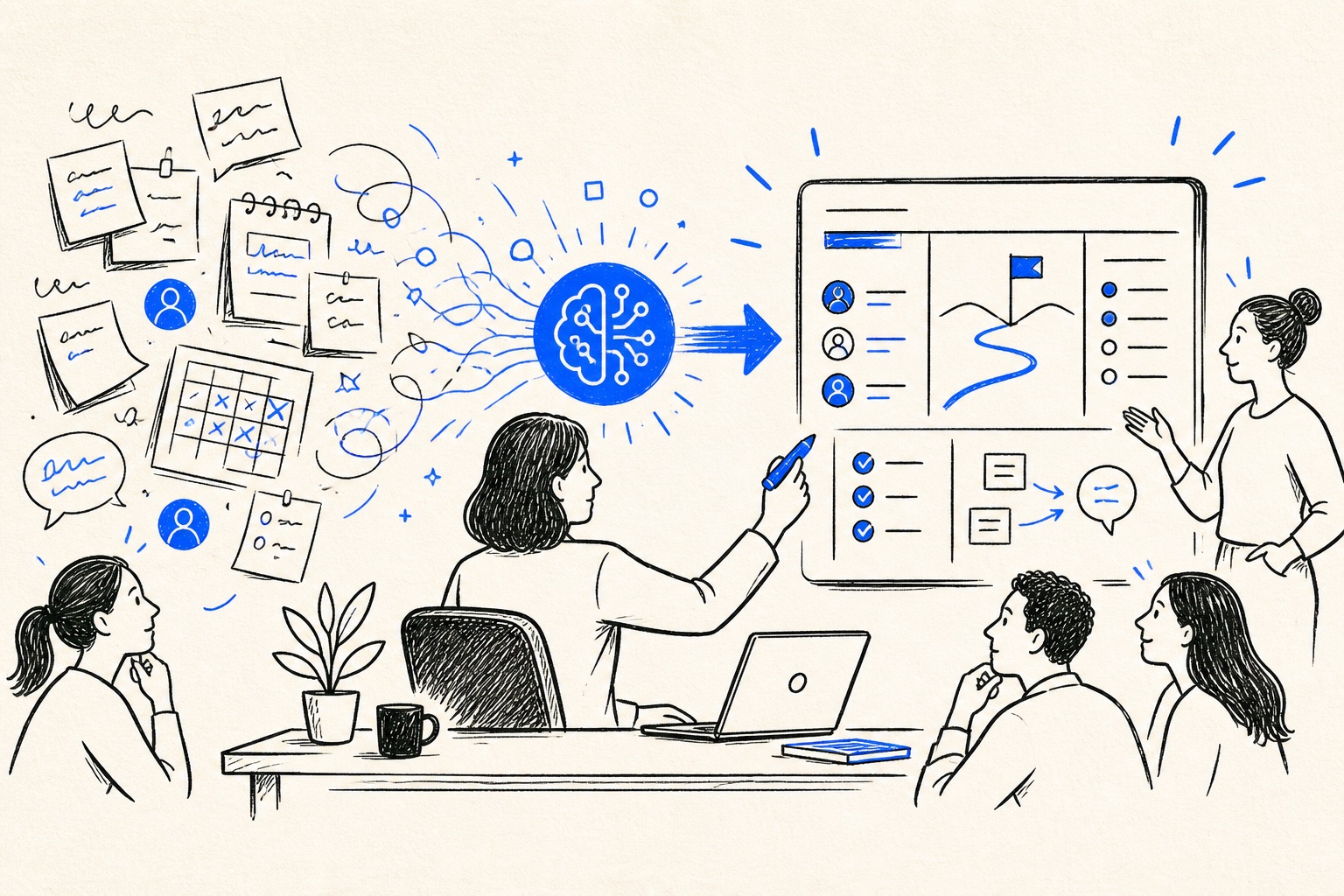
Middle managers are often described as the natural target for automation because their work involves reports, meetings and coordination. That description misses the part of the job that holds organizations together: translating strategy into choices people can act on when the situation is unclear.
AI will change the administrative surface of management quickly. The larger question is whether companies use the saved time to improve coaching, decision quality and operating discipline, or simply ask managers to absorb more work with less support.
The reporting layer will become easier to produce
Managers spend a great deal of time assembling updates from dashboards, notes, calls and spreadsheets. AI can reduce that assembly work by finding patterns, drafting summaries and preparing an initial view of an issue. That is useful, but it is not the same as understanding why a team is stuck or deciding what should change.
The risk is that a fluent summary creates a false sense that the management work is complete. A report can sound coherent while missing the political context, customer concern or tradeoff that the people closest to the work already understand. Good managers will use the summary as a starting point for a better conversation.
Coaching may become the differentiator
As routine coordination becomes more automated, the manager who can give useful feedback and create clarity will become more valuable. Employees will still need help prioritizing, navigating conflict and learning how to judge an unfamiliar output. Those are relational tasks, and they become more important when tools change the pace of work.
Organizations should resist treating AI as a reason to remove the developmental side of management. The teams that adapt well will have managers who explain what is changing, set safe boundaries for experimentation and help people build confidence without pretending every answer can be generated.
The role needs better measures, not just more tools
A manager’s value should be measured through the quality of outcomes the team produces, the speed of decisions and the health of the operating system around them. Counting AI usage will not reveal whether the manager improved the work. It may simply show that the company made a tool available.
The useful change is to give managers clearer evidence about the work they own, then hold them accountable for acting on it. AI can make that evidence easier to assemble. It cannot choose the right intervention or earn the trust required to carry it through.
The middle manager is becoming an editor of work
AI will reduce some managerial administration, but the enduring job is to turn information into decisions, commitments and better performance. Companies that invest in that capability will get more from AI than those that merely use it to compress the org chart.