5 AI procurement mistakes boards can avoid
AI purchasing decisions become expensive when ambition outruns ownership, data readiness and a credible path to sustained use.

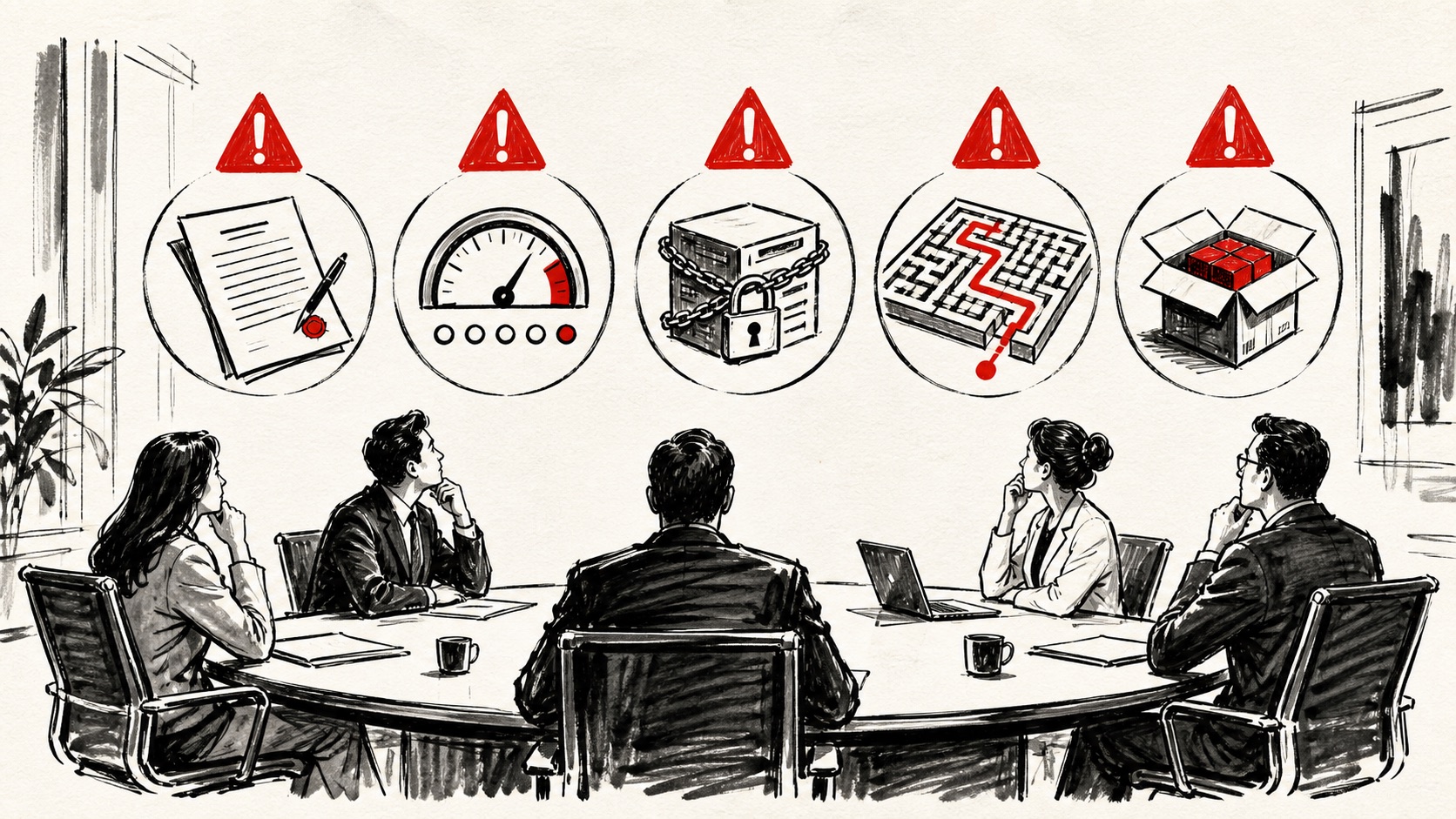
Boards do not need to approve every model choice, but they do need to understand what the organization is committing to operate. The largest risks often sit in contracts, adoption assumptions and missing accountability.
These mistakes matter because they can turn a promising pilot into a long-term cost without a measurable owner.
Three tests for a useful opportunity
The indicator connects spending to utilization, margins or customer demand.
A real constraint limits supply, speed or return on invested capital.
The trend can matter beyond one model cycle or product announcement.
This ranking is an editorial framework, not a forecast or promise of financial results.
The ranking at a glance
Five practical pathsBuying a platform before choosing a workflow
A broad license creates pressure to invent usage after the contract is signed. Start with the operating problem, expected users and acceptance measure, then evaluate the platform.
Pilot enthusiasm should not substitute for a deployment plan.
Ignoring the full cost to serve
Model usage may be a small part of the total cost once integration, data preparation, review, security and support are included. Procurement needs an all-in scenario range.
Include failed attempts and peak usage in the forecast.
Accepting weak data terms
Contracts should clarify retention, training use, subprocessors, data location and deletion. Ambiguous language can limit future options or expose sensitive information.
Security review should cover product features added after signing.
Skipping exit and portability planning
The buyer should know how prompts, evaluations, logs and knowledge assets can move if the provider changes. Portability creates leverage and reduces operational disruption.
Export rights are useful only if the format remains usable.
Funding without post-launch evidence
Every material purchase needs an owner, baseline, review date and threshold for expansion or exit. Without those elements, renewal becomes inertia.
Avoid metrics that count activity without accepted outcomes.
Procure an operating commitment
The contract should reflect the workflow, control model, total cost and evidence required for renewal. AI purchasing is operational design with a vendor attached.
Get the free 25 AI Offers field guide.
Practical starting points, buyer problems and offer angles for the AI economy. Download it now and get the next useful briefing.