AI procurement needs workflow evidence, not feature checklists
The right buying question is not which model is most impressive. It is which product can improve a defined workflow while preserving the controls the organization needs.

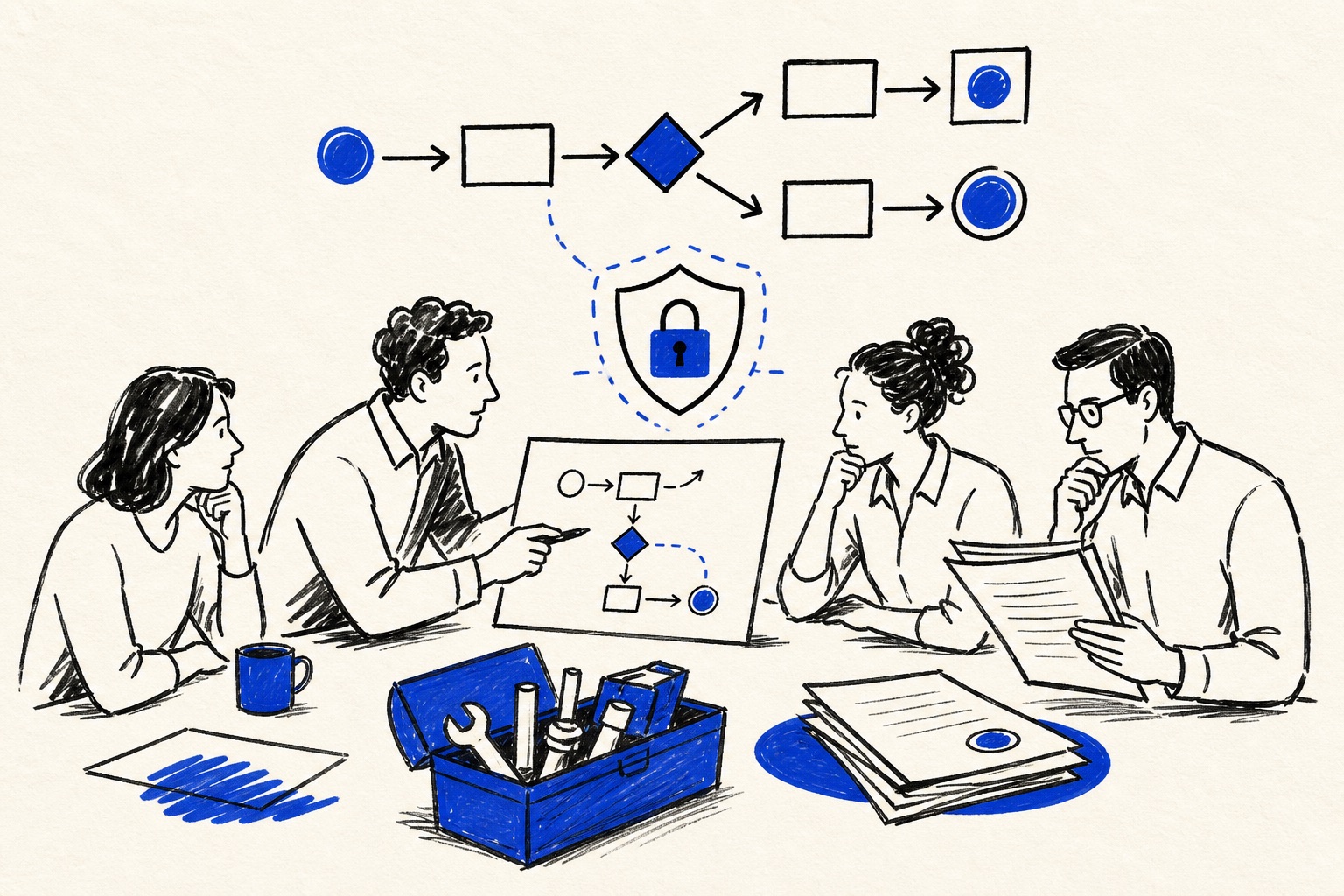
AI procurement is arriving at a familiar organizational problem with a new vocabulary. A business wants to move quickly, security wants to manage exposure, finance wants a forecast and the eventual users want a tool that actually helps. A feature checklist rarely resolves those competing needs.
The better starting point is a workflow. When a buyer can name the task, the owner, the baseline and the acceptable failure modes, a product evaluation becomes more concrete. The technology still matters, but it is evaluated in the context where it will have to perform.
Start with the work that needs to change
A vendor demonstration is designed to show capability. Procurement needs to understand fit. That begins with the existing process: what enters it, where decisions happen, how quality is assessed and who feels the cost of delay. Without that map, a company can buy an impressive tool and still have no practical route to adoption.
The best pilot is narrow enough to measure and important enough to matter. It gives the organization a chance to test security, usability and value without forcing every department to agree on a grand AI strategy before anyone has seen a useful outcome.
Commercial terms should reflect uncertain usage
Many AI products have variable costs, evolving capabilities and changing service limits. A contract needs room for those realities. Buyers should ask how usage is metered, what happens when a model changes and which support obligations apply when a workflow becomes customer facing or business critical.
The aim is not to eliminate uncertainty. It is to decide which party is responsible for managing it. A provider that knows more about model behavior should not leave every surprise cost or reliability issue to the customer. A buyer should not promise a companywide rollout before it understands the operating burden.
A responsible buyer plans the exit as well as the launch
AI tools touch data, processes and employee habits. If a product does not work, the company needs a clear way to move the workflow elsewhere without losing records, access controls or the knowledge it created. Portability is not an abstract contractual clause. It is a condition for making a confident decision in a fast-moving market.
The strongest procurement teams treat this planning as a source of leverage rather than a sign of distrust. When expectations about data, service levels and transition are explicit, both buyer and vendor can focus on making the current deployment useful instead of arguing later about assumptions that were never written down.
The product must earn its place in the operating model
AI buying improves when the organization evaluates a product through the work it will change. That approach produces better pilots, clearer contracts and fewer expensive tools that never become part of how the company actually runs.