AI security is becoming a boundary problem
The key question is not whether an AI model is secure in isolation. It is what information, tools and authority the surrounding system gives it.

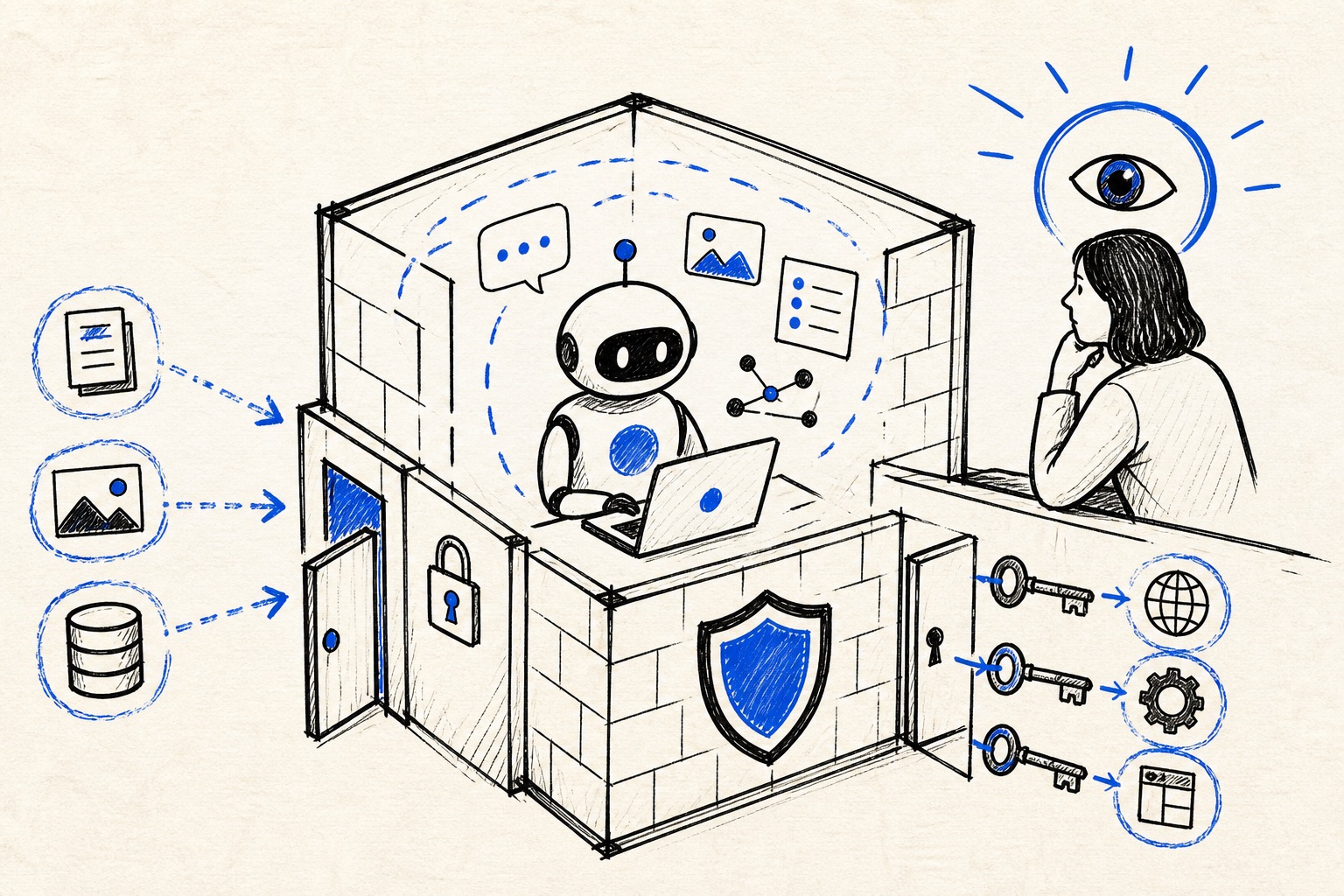
AI security conversations often focus on the model itself, but many of the practical risks appear at the edges. A system can read a document it should not access, call a tool with too much permission or follow a malicious instruction embedded in otherwise ordinary content. The problem is a boundary problem as much as a model problem.
That framing is useful because organizations already know how to reason about boundaries. They can define access, limit authority, log actions and require approval for sensitive steps. AI does not remove those practices. It makes their quality more consequential.
Least privilege matters for agents as much as people
An AI system should receive only the information and tool access required for the task it is performing. Giving an agent broad access because it may be useful later creates unnecessary exposure. The right design starts small, observes the workflow and expands authority only when there is a clear reason and a clear owner.
This approach also improves debugging. When an agent can act in only a defined set of places, a team can more easily understand why a result occurred and contain a mistake. Broad permissions make a system look powerful until something goes wrong and nobody can reconstruct the path it took.
Untrusted content needs a different treatment
AI systems often process emails, documents, web pages and customer messages that contain instructions alongside information. A model may not reliably distinguish between content that should be summarized and content that should control its behavior. That makes untrusted input a central design concern, not a rare edge case.
Teams can reduce risk by separating data from instructions, constraining tool use and testing the ways malicious or confusing content might influence the workflow. The goal is not to assume that every input is hostile. It is to ensure that a single unexpected string cannot quietly expand the system’s authority.
Security review must include the operating workflow
A technical review of the model connection is necessary, but it is incomplete if it ignores the people and processes around the tool. Who can change the prompts, who reviews logs, who responds to an incident and who can override a decision? These questions determine whether a control remains effective after the initial deployment.
The best security programs work with product and operations teams early. They help define a service that can be used safely rather than arriving after a launch to explain why the design cannot be approved. In AI, that collaboration is one of the most practical forms of risk reduction.
Secure AI systems are built through deliberate limits
A model becomes risky when it is surrounded by uncontrolled data and authority. Companies that treat access, tools and human ownership as first-class design choices will build systems that are easier to use and far easier to defend.