AI abundance has an attention cost
When content, analysis and outreach become cheap to generate, the scarce resource is the person who has to read, review or respond to the result.

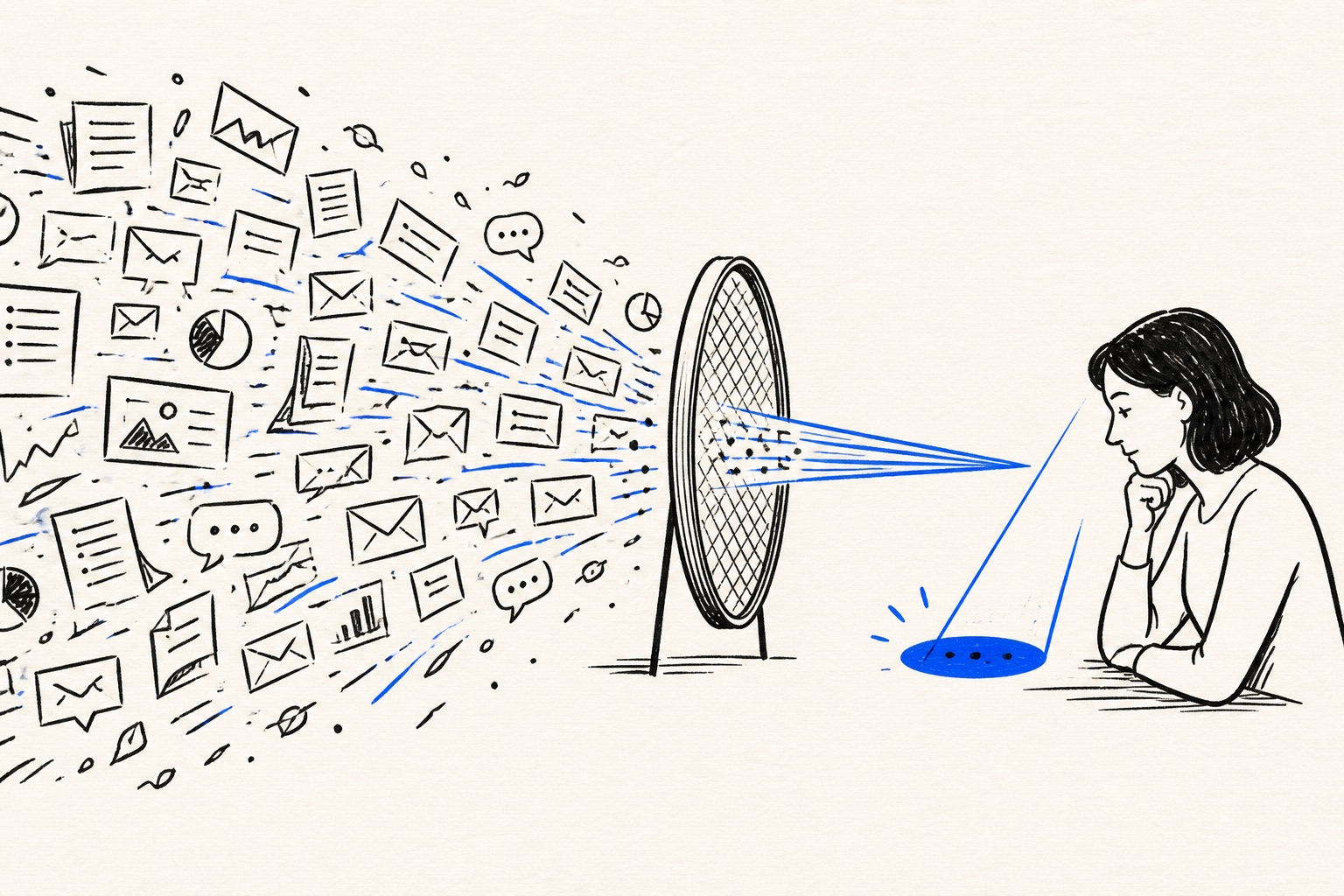
AI makes it easier to create material that looks complete. A team can produce more emails, reports, concepts and campaign variations with less effort than before. The recipient, however, still has the same finite attention and the same need to decide what deserves a response.
This creates an attention cost that organizations need to manage deliberately. If every productivity gain becomes more material sent downstream, AI can make the workplace noisier even as individual tasks become faster.
The receiver pays for the sender’s efficiency
A generated memo may take minutes to produce and an hour to evaluate. A personalized outreach campaign may be simple to send and burdensome to receive. These differences are easy to ignore because the system measures the action that was automated rather than the attention required from the person on the other side.
Teams should ask who will review the output and what decision it is meant to support. If there is no clear answer, the material may not need to exist. This is not an argument against generation. It is an argument for treating attention as a real operating resource.
Standards can protect focus
Organizations can create simple rules that reduce unnecessary output: a brief should state the decision requested, a message should have a named audience and a generated report should not be distributed without a reason someone will use it. These standards make AI more valuable because they connect production to purpose.
Managers also need to model restraint. If leaders reward volume, employees will use AI to create more volume. If leaders reward clarity, useful evidence and disciplined follow-through, the technology can help the organization become more focused rather than merely more active.
Curation becomes a core capability
As information grows, the ability to select, summarize and direct attention becomes more important. This is not only an editorial skill. It matters in customer service, management, research and product design. Someone needs to decide which signal is worth elevating and which material should remain background context.
AI can assist with curation by organizing sources and identifying patterns. The final responsibility remains human because the value of a signal depends on the goals, obligations and relationships of the organization receiving it.
The best AI output may be the material nobody had to read
AI can increase production without increasing value. Companies that respect attention, set clear standards and reward curation will turn abundance into better decisions instead of a more sophisticated form of noise.