Cloud AI revenue needs a quality checklist
A large number can be meaningful, but investors still need to know whether it reflects durable workloads, discounted experimentation or infrastructure pass-through.

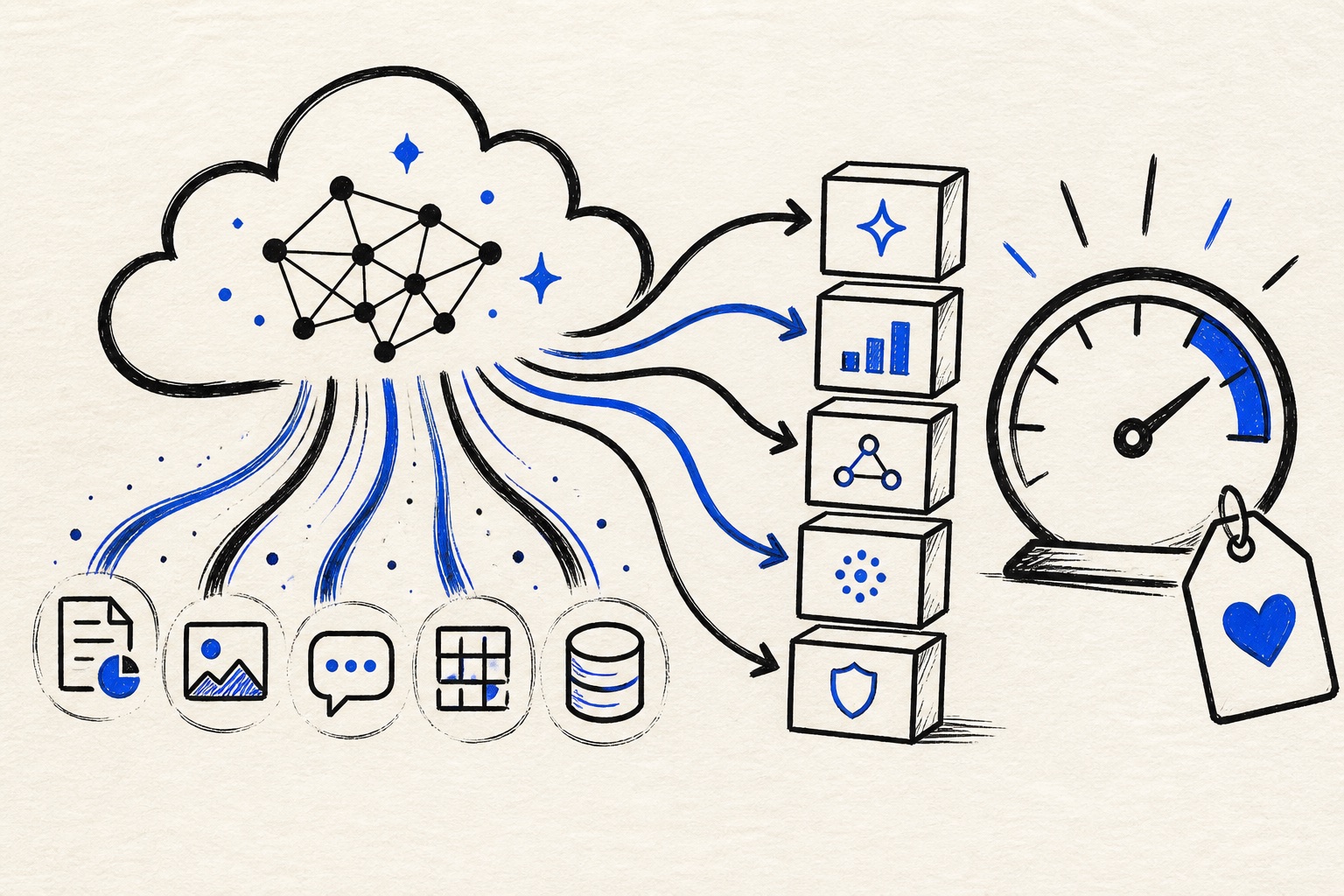
Cloud providers are central to the AI economy because they sell the infrastructure, platforms and services that make large-scale deployment possible. Their AI revenue figures will therefore attract enormous attention. The challenge is that a headline number can combine very different activities with very different implications for durability and margin.
A useful investor question is not whether AI revenue is growing. It is what customers are buying, how often they return and how much of the growth reflects a service that can earn attractive returns after the cost of providing it. The answer requires a more granular view than the market often gets in a quarterly update.
Infrastructure demand and application demand are not the same
A customer renting raw compute, a company training its own model and a business consuming a managed AI service may all be counted within a broad AI category. They have different sales cycles, switching costs and margin profiles. The first can be capital intensive and price sensitive. The last may create more product stickiness if it becomes part of a workflow.
Investors should ask which mix is growing and why. A surge in infrastructure demand can be important, particularly if it drives utilization. But it should not automatically be treated as proof that higher-level software demand is equally durable. The commercial layers of AI are related, not interchangeable.
Discounts can be strategic or misleading
Credits, introductory pricing and partner incentives are normal tools in a competitive market. They can help a customer experiment, build a product and become a meaningful long-term user. They can also obscure whether the customer would pay the full price once the initial support ends.
The key is not to assume discounts are bad. It is to understand their role. A provider that uses them to win a workload with clear expansion potential may be making a rational investment. A provider that depends on them to keep an uneconomic workload active is telling a different story about the quality of demand.
Workload maturity is the signal to watch
The most promising cloud AI revenue comes from customers that have moved beyond experimentation into a product or operating workflow with measurable use. Those customers tend to care about reliability, security and support, which can support a more durable relationship than a short-term research project.
Maturity does not mean the workload will never change. Models evolve and customers may optimize their systems. It means the service has become valuable enough that the buyer has an incentive to improve it rather than abandon it. That is a stronger foundation for revenue than pure curiosity.
Margin follows operational discipline
AI cloud revenue can be attractive if providers manage utilization, power, hardware lifecycle and product design well. It can be less attractive if expensive capacity is used for low-value tasks or if support and reliability requirements grow faster than price. The market needs evidence that management understands which version it is building.
The clearest signals will be practical: stable pricing, improving use of infrastructure, healthy retention and a customer mix that is not dependent on a handful of promotional workloads. Those details are harder to fit into a headline, but they are where the financial quality of AI revenue will be established.
The right question is what the customer keeps doing after the demo
Cloud AI revenue will become more meaningful as the market can distinguish durable production workloads from transient activity. Investors should reward the providers that explain that distinction clearly and show that their infrastructure is serving customers at an economic price.