Data provenance is becoming an AI product feature
Customers will increasingly ask not only what an AI system says, but what evidence it used, whether that evidence is current and how they can verify the answer.

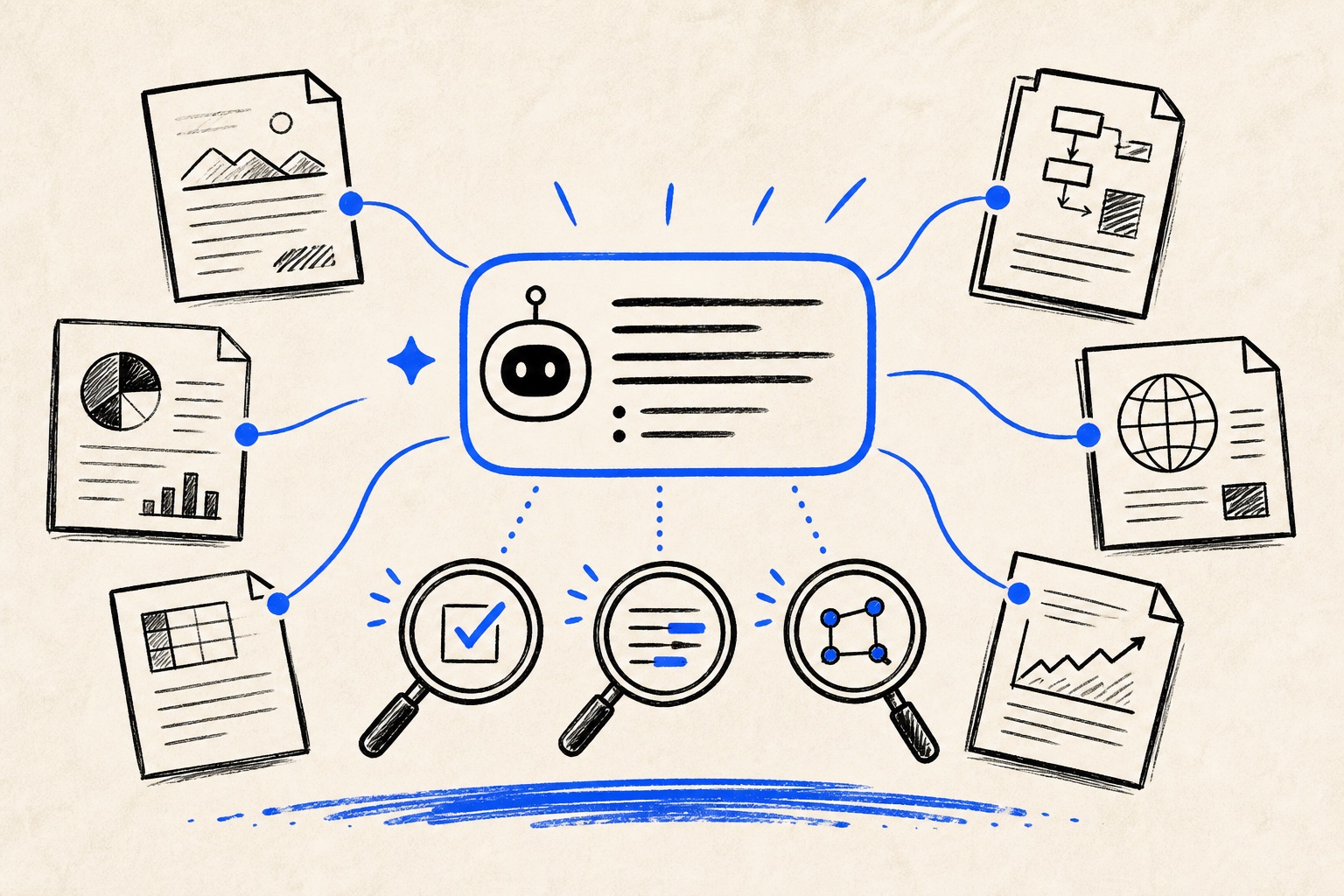
AI makes it easy to produce an answer and harder to know whether that answer deserves trust. In many business settings, the user does not need a fluent summary alone. They need to know what source supports it, how recent the source is and whether important evidence was excluded or misunderstood.
That makes provenance a product feature. The ability to trace an output to an approved source can improve confidence, reduce review time and create a clearer boundary between a useful assistant and an unverified generator.
A citation is useful only when it supports the claim
Products often add source links as a signal of reliability. The value depends on whether the link actually supports the statement the system made. A long document may be technically related but still fail to establish the conclusion. Users need enough context to see the connection without reading an entire archive for every answer.
Good provenance design surfaces the relevant passage, the date and the source owner where appropriate. It also makes uncertainty visible when evidence is thin or conflicting. That is not a weakness. It gives the user a more accurate picture of what the system knows and what still needs judgment.
Freshness is part of truth in a changing system
A source can be authoritative and still be outdated. Policies change, product details evolve and operational records are corrected. An AI product that does not distinguish current information from old information can create a confident answer that is worse than no answer at all.
Teams need a lifecycle for source material. Someone should own updates, expired documents should be handled deliberately and important answers should make the freshness of evidence clear. This is an operational commitment, not a prompt technique.
Provenance helps companies improve their knowledge base
When users can see which sources appear in an answer, they can identify missing documents, unclear policies and records that should not have been treated as authoritative. The product becomes a diagnostic view of the organization’s own knowledge quality, not merely a place to retrieve information faster.
That feedback can create a valuable loop. Instead of treating an AI assistant as a layer placed on top of static data, the company can use it to maintain the data itself. Better source stewardship then improves the product, trust and the quality of future decisions.
An answer becomes more valuable when a user can verify it
Provenance turns AI from a source of plausible language into a tool for working with evidence. The products that make source, freshness and uncertainty visible will be easier to trust and easier to improve.