The enterprise AI build versus buy choice is not binary
Most successful organizations will combine purchased models and platforms with internal workflow design, data stewardship and selective custom development.

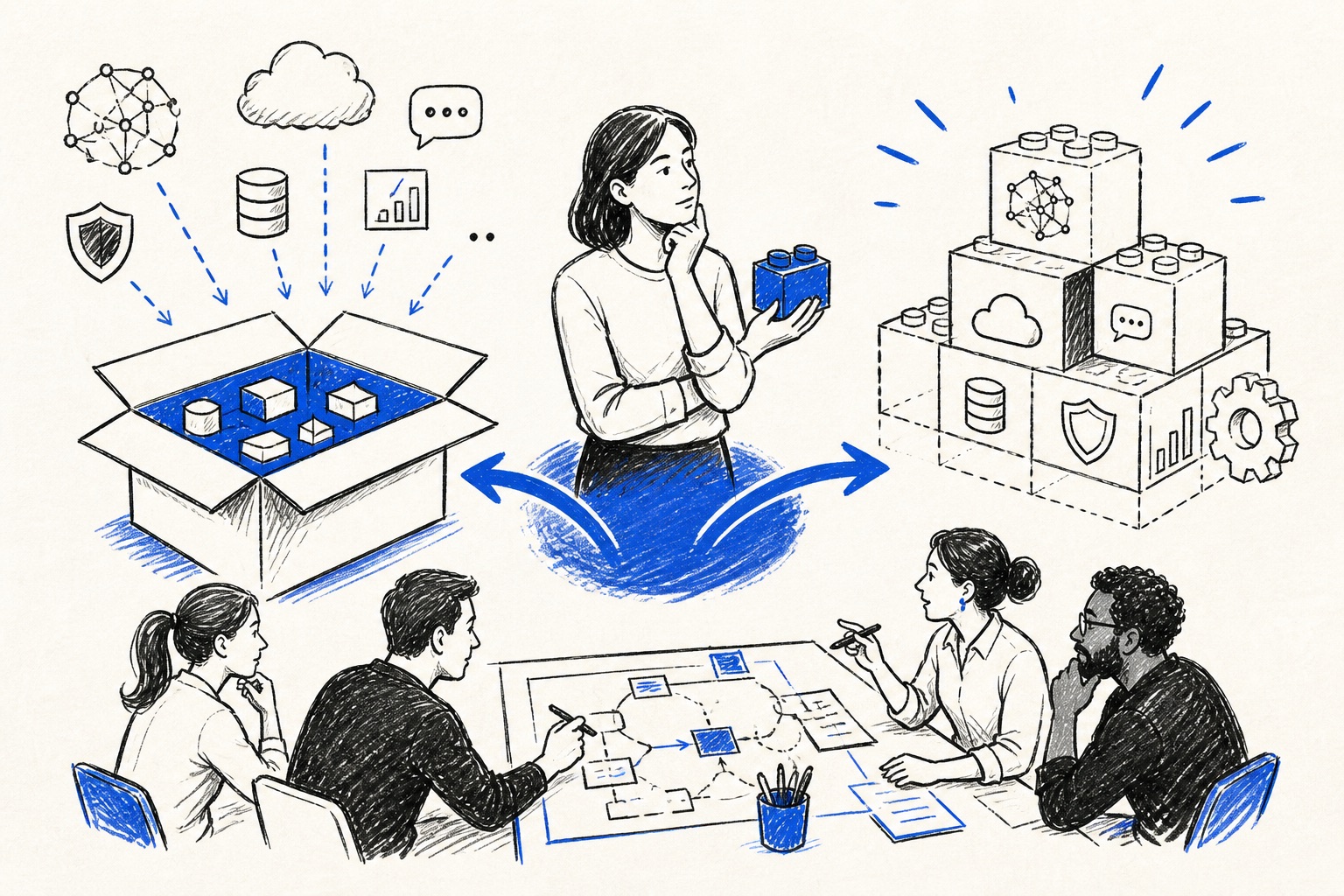
Build versus buy is a useful question only if it is applied to the right layer of the system. An enterprise may sensibly buy model access, security tools and general platforms while building the workflow, data connection and product experience that make the result useful to its own people and customers.
The false choice appears when leaders assume they must either outsource the whole capability or recreate every component themselves. The real work is to understand which parts are common infrastructure and which parts embody the organization’s own operating advantage.
Buy the commodity, own the consequence
Many AI capabilities are becoming standard services. Buying them can save time and provide reliability that an internal team would struggle to match. The organization should still own the consequence of using the service, including the workflow rules, data controls and customer commitments that sit around it.
This is where a buyer can create differentiation. The value often lives in how the company connects a general capability to a specific process, how it measures the outcome and how it handles the moments when automation is uncertain. Those choices cannot be delegated entirely to a vendor.
Custom work needs a reason to exist
Building a bespoke model or platform can be justified when the organization has unique data, unusual requirements or a product proposition that cannot be supported by a general service. It is less justified when the motivation is simply a desire to appear technically independent. Custom systems create an ongoing commitment to talent, evaluation and maintenance.
Leaders should ask whether the work will produce a capability that customers or employees genuinely experience as better. If the answer is unclear, the company may be better served by buying a stable component and investing its limited resources in the workflow and change management that determine adoption.
Architecture should preserve future options
A practical strategy can begin with a purchased service and leave room to change components later. Clear interfaces, evaluation data and documented workflows make that easier. The goal is not to assume a future migration, but to avoid a design where one early vendor decision quietly becomes inseparable from the company’s entire operating model.
Options have value in a fast-moving market. An enterprise that knows what it owns, what it rents and how it would test a change can respond calmly when capabilities or pricing evolve. That flexibility is more useful than a rigid commitment to building or buying as an identity.
The right architecture is the one that protects the company’s real advantage
Enterprises will buy much of the AI stack and should. Their strategic work is to own the workflow, data and accountability that make those components valuable. That is where build versus buy becomes a business decision.