Enterprise search is becoming an AI knowledge problem
The challenge is no longer simply finding documents. It is deciding which information deserves to shape an answer and who is responsible for keeping that information current.

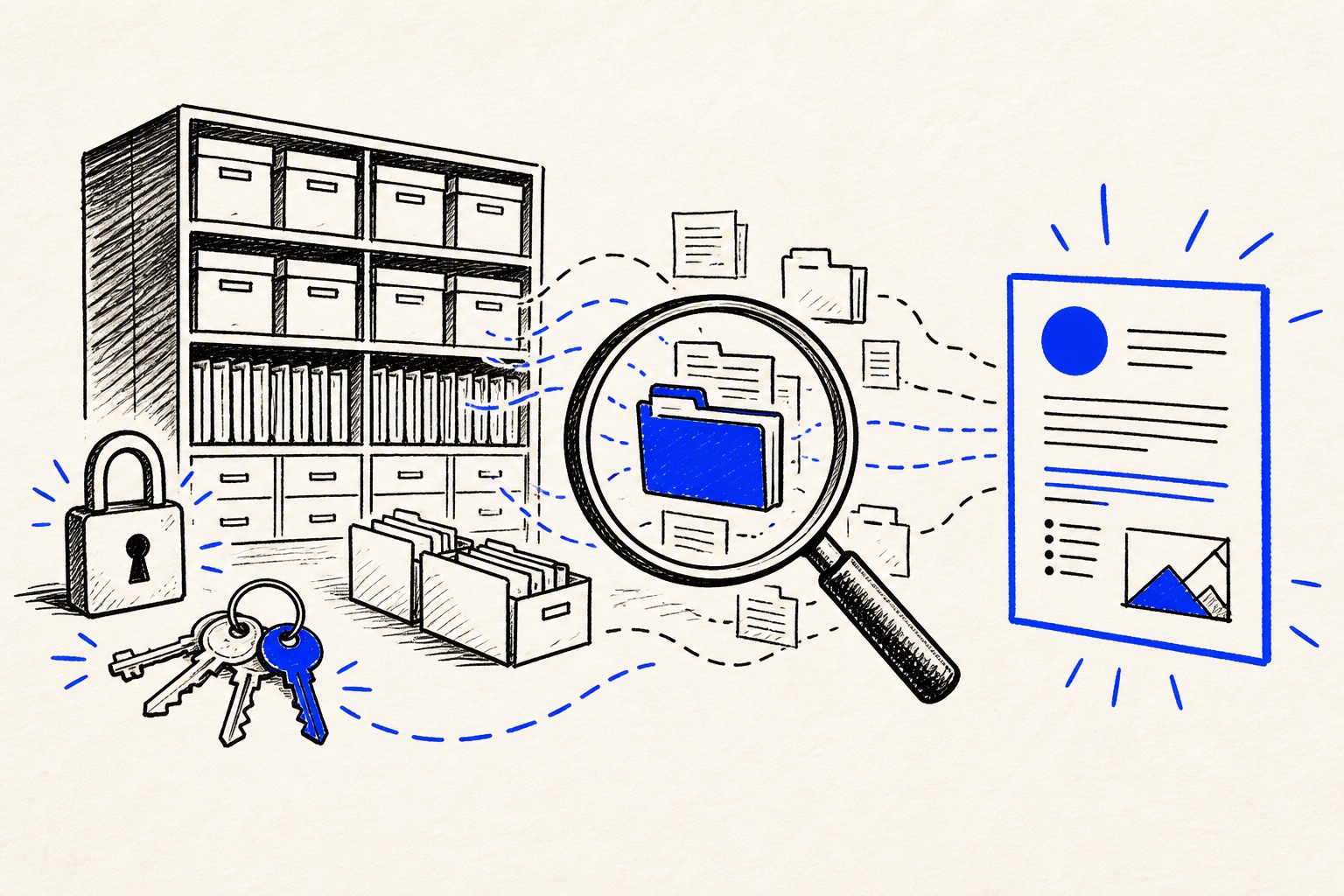
Enterprise search has long struggled with too many documents, inconsistent permissions and a gap between how information is stored and how people ask questions. AI can make the interface feel much better, but it also exposes the deeper problem: an organization may not know which of its records are current, authoritative or safe to use.
The outcome depends on knowledge stewardship more than the novelty of the search box. A smart answer is only as useful as the sources behind it and the way the company manages their lifecycle.
The knowledge base needs named owners
Every important source should have someone accountable for its relevance, access and update cycle. Without that ownership, old policies sit beside new ones, draft guidance appears authoritative and employees receive confident answers built on material nobody intended to preserve. AI makes these problems more visible because it can combine sources quickly.
Ownership does not require a vast central team. It requires a clear relationship between a business area and the documents that define its work. The role may be distributed across departments, but it should be explicit enough that users know where an answer came from and who can correct it.
Permissions have to survive the answer layer
A useful search experience cannot treat access as an afterthought. If a person could not open a document directly, an AI system should not expose its content through a summary. That sounds obvious, but it becomes difficult when information is indexed, transformed and combined across many systems.
The right architecture preserves permission boundaries before retrieval and makes them testable. Companies should also consider what happens when a person changes roles, a project closes or a document becomes restricted. Knowledge access is dynamic, and an AI layer needs to reflect that reality continuously.
Search quality is an organizational mirror
When employees complain that an assistant gives unreliable answers, the failure may not be in the model. It may reveal that the company has contradictory policies, undocumented practices or a culture where the real answer lives in a small group of people. Those are knowledge problems that existed before AI and become harder to ignore after it.
This is why enterprise search should be treated as a long-term operating capability. It can improve efficiency, but it can also show leaders where the organization has failed to turn experience into accessible shared knowledge. The product becomes valuable when it helps repair that condition.
Better answers begin with better knowledge ownership
AI search can make organizational knowledge easier to use, but it cannot decide what should be trusted. Companies that assign ownership, preserve permissions and learn from bad answers will build a system people can depend on.