Frontline AI adoption will be won in the first fifteen minutes
For workers under time pressure, an AI tool has a short window to prove that it understands the job, fits the environment and will not create a new problem for them to solve.

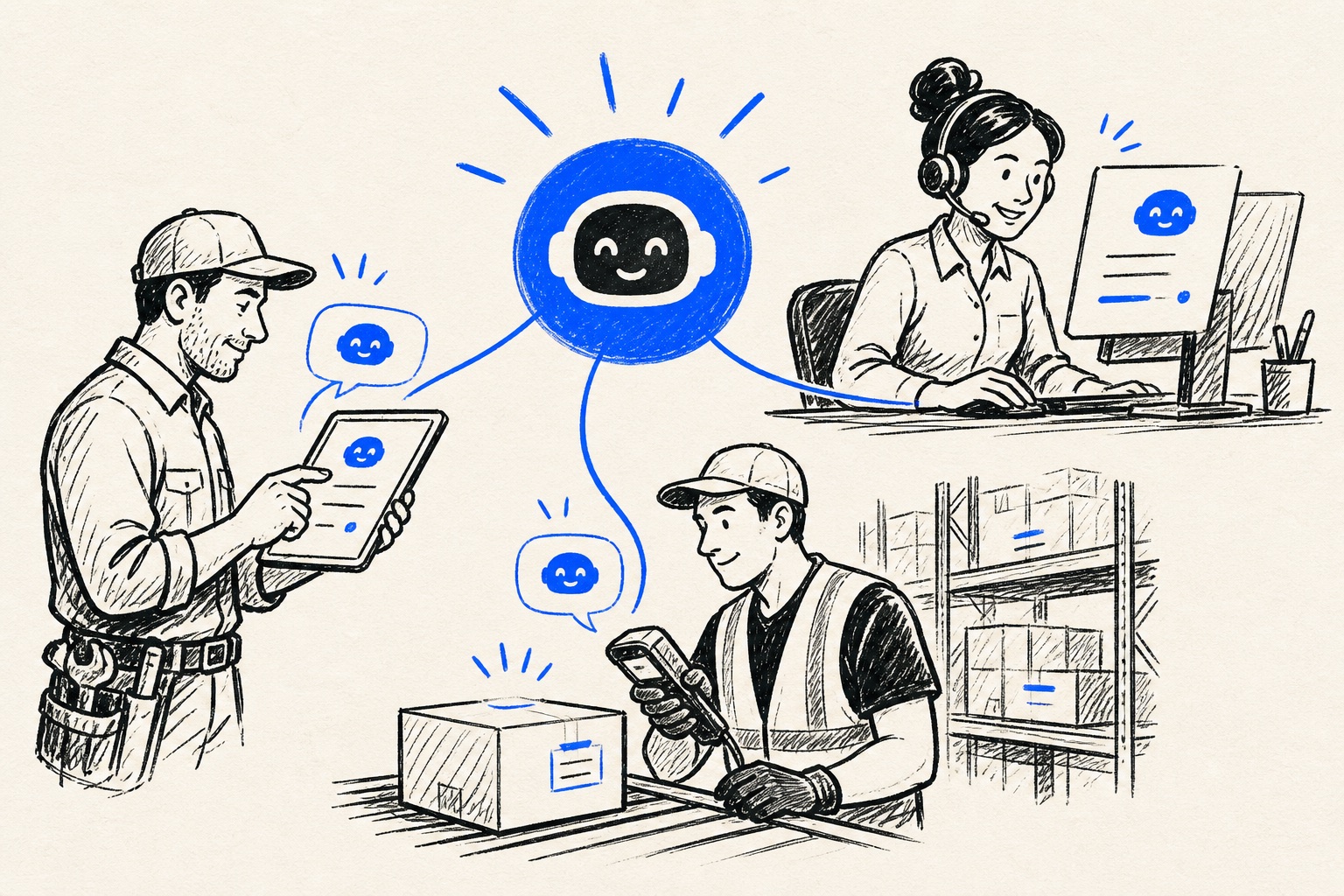
Frontline workers rarely have the luxury of exploring a new tool in a quiet hour. They are serving customers, moving through locations, handling equipment or managing an unpredictable stream of requests. If an AI system does not fit that reality quickly, it can become another reason to look away from the work that actually matters.
Adoption in these settings is therefore intensely practical. The tool must save a step, reduce an error or make a decision easier without demanding a separate vocabulary, a long setup or blind trust from the person responsible for the outcome.
The first task has to feel familiar
A strong frontline AI experience begins with a task the worker already recognizes. It may help document an inspection, translate a common question, find a procedure or prepare a handover. The worker should be able to compare the result with their normal method and see the benefit without being asked to redesign their entire job on the first day.
This is why generic chat interfaces often struggle in operational settings. They ask the employee to decide how to use the tool before the tool has shown that it understands the work. A focused workflow can make the value visible immediately.
Trust grows through correction, not perfection claims
Workers are more likely to adopt a system when they can correct it easily and see that the correction matters. A tool that never acknowledges uncertainty or makes it difficult to override an output can feel like a threat, especially in environments where people carry real safety or customer responsibility.
Training should include examples of when not to use the system and how to escalate a concern. That honesty builds credibility. It tells the worker that the organization values their judgment and expects the tool to support it rather than silently replace it.
Managers set the social conditions for use
A frontline team watches how managers respond to a new tool. If the rollout is framed as a way to monitor performance or reduce staffing without explanation, employees will often find ways around it. If managers use the system to remove irritating work and respond to feedback, adoption becomes more credible.
The manager’s role is to create time for practice, recognize useful feedback and make clear that the tool will be judged by the quality of the work it enables. That human leadership is often more important than an additional feature release.
The frontline tool has to respect the conditions of frontline work
AI adoption begins with a useful first task, a clear correction path and managers who treat worker feedback as part of the design. Get those conditions right and the system can earn a place in the real flow of work.