The learning organization has a new advantage in the AI era
As tools and models change, the organizations that can absorb evidence, update a shared method and teach one another will outperform those that treat each deployment as an isolated project.

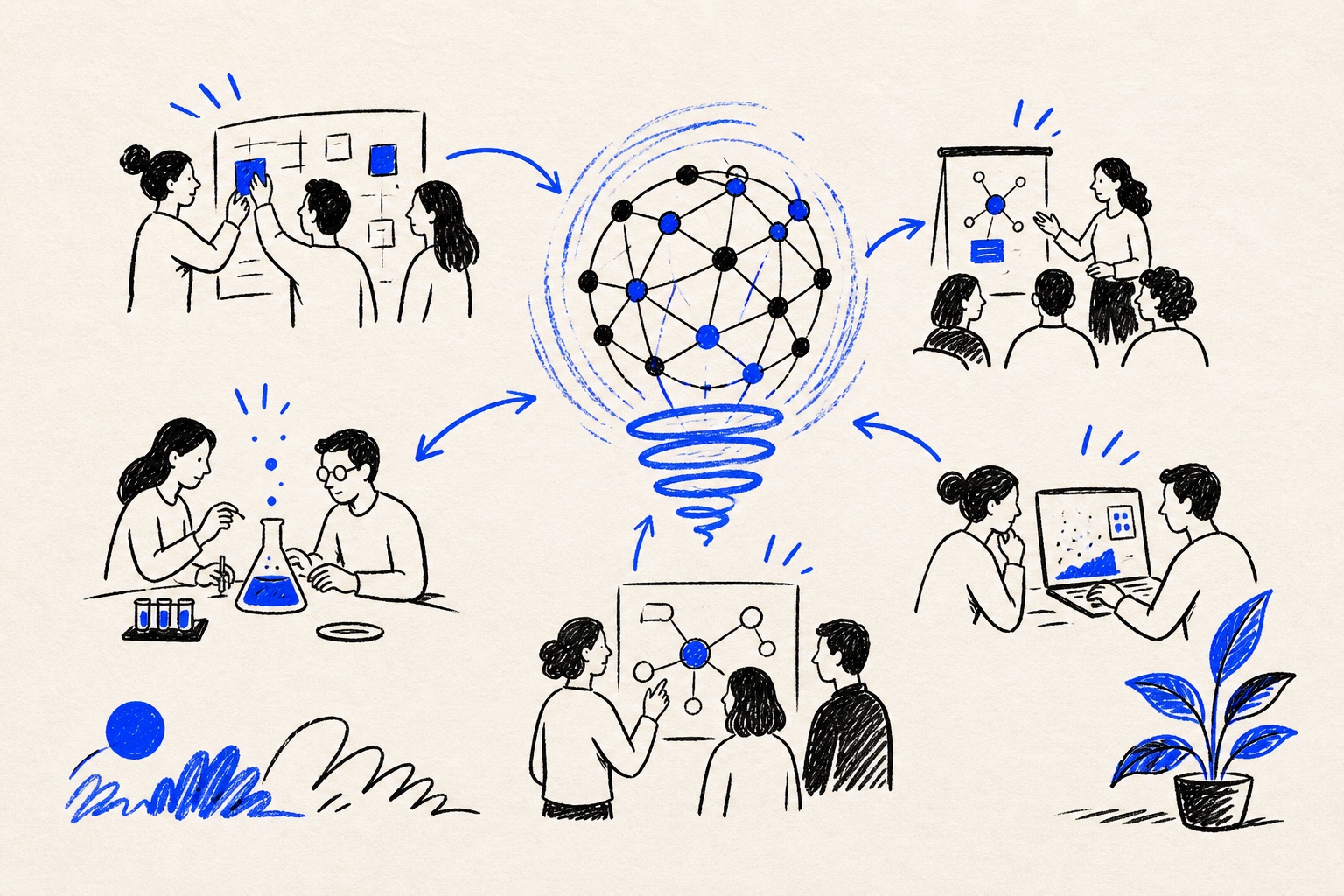
AI changes quickly enough that no static playbook will remain complete for long. The advantage therefore shifts toward the organization that can learn in motion. It can run a bounded experiment, observe the result, update a shared practice and help the next team start from a better position.
This kind of learning is not a vague cultural aspiration. It is an operating capability with owners, evidence and a way to move insight from one part of the business to another without forcing every group to repeat the same mistakes.
Experiments need a record that survives the team
A pilot often produces useful knowledge about data quality, customer behavior, review burden or the limits of a model. If that knowledge stays with the small group that ran the experiment, the organization loses much of the value. The next team begins from zero and may repeat the same work under a different name.
A learning organization captures the question, the method, the outcome and the conditions under which the result should not be generalized. This makes the record honest enough to be useful. It does not claim that one success proves a universal strategy, but it gives others a credible starting point.
Shared standards accelerate good judgment
As teams accumulate examples, they can define standards for approved data, useful evaluation, customer communication and human review. These standards reduce the cognitive load of every new project. A team can focus on the part of the problem that is genuinely new rather than reopening basic questions that another group has already answered well.
The standards should remain open to challenge. AI practice evolves, and a rule that was sensible for an early deployment may become too strict or too loose as the organization gains evidence. The point is to create a shared baseline, not a permanent bureaucracy.
Teaching is how capability scales
A central AI team can provide tools and policy, but capability spreads when managers and practitioners can teach each other how to use those resources in real work. This requires time, examples and recognition for people who help others improve. It also requires leaders to value learning as a contribution, not a distraction from delivery.
The organizations that do this well will have a compounding advantage. Each useful deployment makes the next one easier because the company has better data, clearer methods and more people who understand both the opportunity and the responsibility. That is a more durable asset than any single model choice.
The lasting advantage is an organization that can improve together
AI will keep changing. The companies that can capture evidence, update their methods and teach across teams will turn that change into a capability that grows with every responsible use case.