Model distillation is a product economics decision
Smaller specialized models can reduce cost and latency, but the real value comes from knowing which part of the customer experience must retain frontier-level capability.

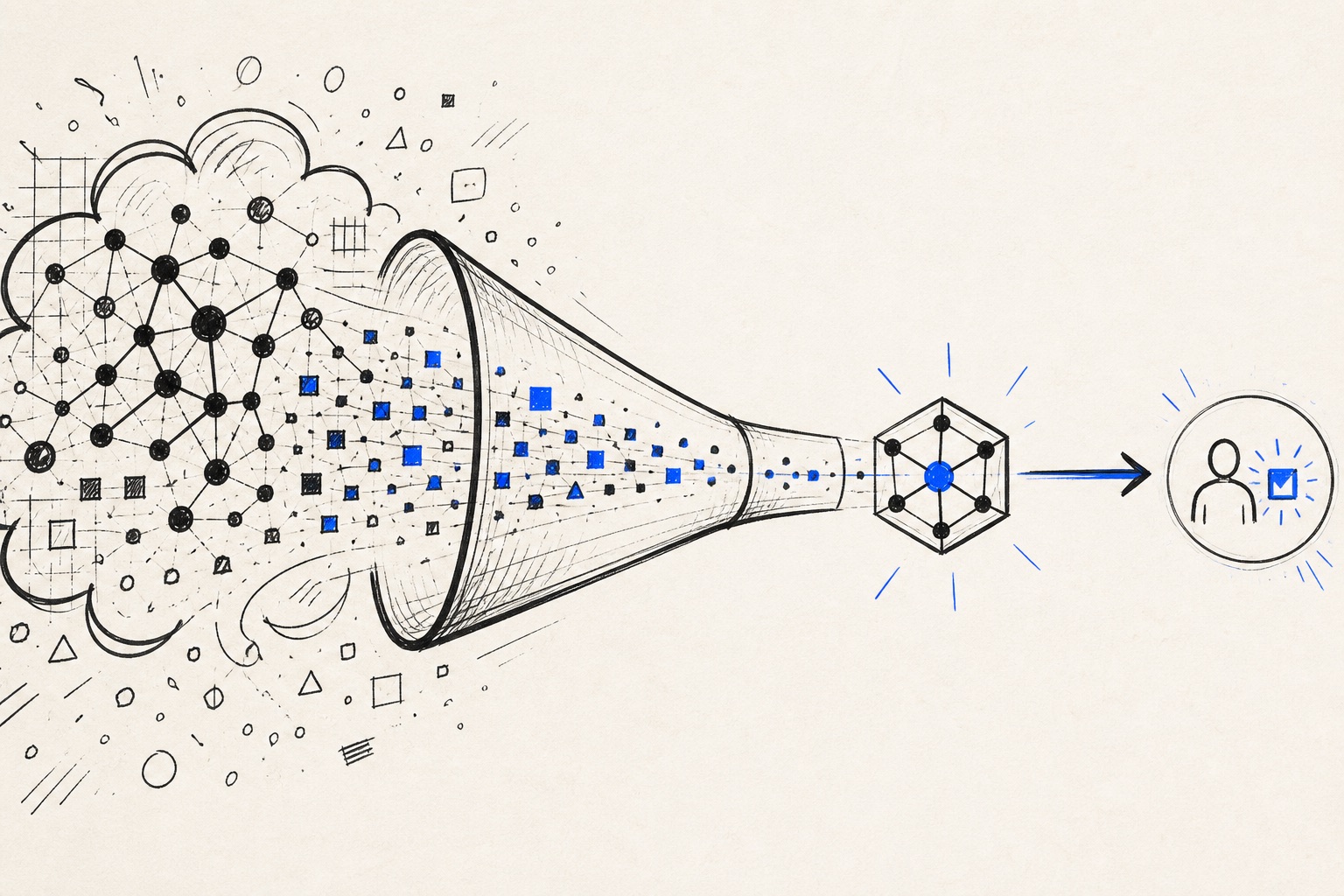
The appeal of smaller models is obvious. They can be cheaper to run, easier to deploy and faster to serve. Yet model distillation is often discussed as a technical optimization when it is really a product economics decision. A company needs to decide which tasks demand broad capability and which tasks benefit more from predictable, narrow performance.
That decision can reshape the business. It affects price, reliability, privacy and the way a product behaves when demand grows. The advantage comes from matching the model to the job rather than treating every user request as a test of maximum intelligence.
Narrow tasks create room for smaller systems
Many production workflows repeat a constrained pattern: classify a request, extract a field, draft a standardized response or summarize an approved record. A smaller model may perform well when the task, data and expected output are carefully defined. It can also be easier to evaluate because the acceptable behavior is more concrete.
The key is not to force a smaller model into work it cannot support. Teams should identify the tasks where a high-capability model adds little incremental value and where speed or cost is more important. That clarity turns distillation into a product choice rather than a blanket efficiency project.
Quality thresholds should be commercial thresholds
A product team should define what level of quality is required for a customer to receive a useful result. That may vary by task. An internal draft may allow more variation than a customer-facing answer or a regulated decision. The threshold should be tied to the consequence of an error, not merely to an abstract measure of model similarity.
Once that threshold is clear, a company can evaluate whether a smaller model meets it consistently enough to support the promise being sold. This makes cost savings more meaningful because they are achieved without quietly weakening the customer experience.
Hybrid systems can preserve the best of both approaches
A product does not need to choose one model for every interaction. It can route routine work to a smaller system and reserve a more capable model or human review for complex cases. The customer experiences a service designed around the task, while the provider manages the underlying economics with more precision.
That architecture requires good monitoring and an honest understanding of exceptions. The savings disappear if every difficult case is routed late or if the customer cannot predict when behavior will change. A well-designed hybrid system makes the boundary between routine and complex work part of the product standard.
The smaller model wins when the product knows what it needs
Distillation is not a race to use the least expensive model. It is a disciplined way to align capability, cost and customer expectation. Companies that make the task boundary clear can improve all three at once.