Model vendor switching costs are more human than technical
Changing a model provider can be easier than changing the prompts, evaluation habits, data practices and team routines that grew around the original choice.

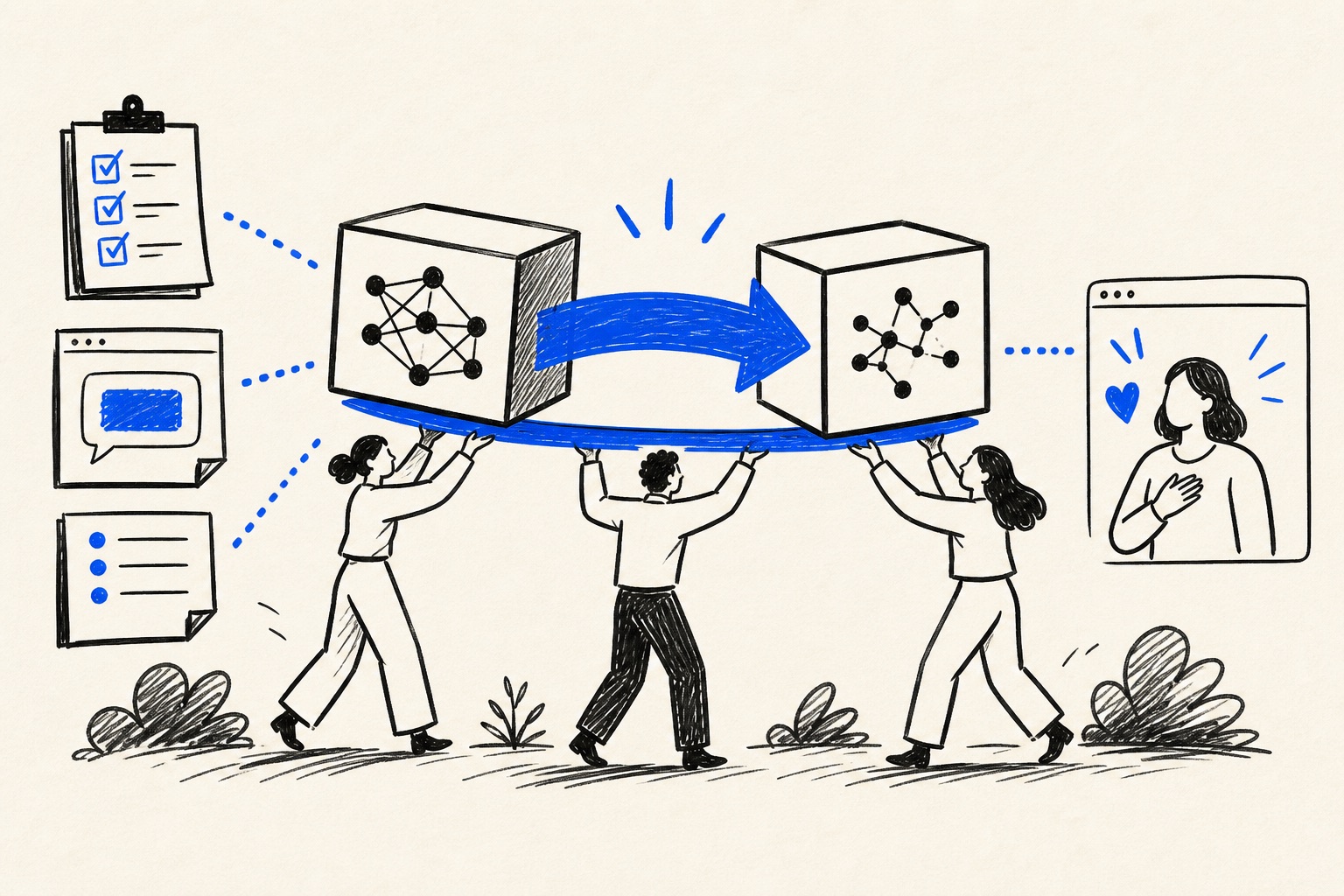
The AI market is moving quickly enough that companies understandably want to preserve choice. They do not want a core product to depend on a single model provider if price, capability, policy or reliability changes. The technical ability to switch matters, but it is only one part of the real transition cost.
Teams build habits around a model. They learn what inputs work, which outputs require review and how to explain limitations to customers. Those human systems can be more difficult to move than an application interface.
Portability begins with a clean product boundary
A company that connects every feature directly to a provider-specific capability may gain speed at the beginning and create a difficult migration later. A cleaner design separates the customer experience, the workflow logic and the model layer where possible. That does not eliminate switching work, but it makes the work visible and manageable.
The point is not to reduce every model to the lowest common denominator. Some capabilities are worth using because they create real product value. The company should simply know which parts are portable, which parts are differentiated and what would have to change if the underlying service became unavailable.
Evaluation is the real migration asset
A model change is safe only when a company can test whether the new system performs acceptably on the work that matters. That requires a set of examples, quality thresholds and failure cases that reflect the actual product. Without an evaluation practice, a switch becomes a series of anecdotes and emergency fixes.
Building that evidence has a benefit even if the company never changes vendors. It clarifies the product standard, reveals where human review is needed and gives the team a shared language for discussing quality. In that sense, portability is a byproduct of good operational discipline.
Customers need continuity, not a technical explanation
A provider may be excited to announce that it has moved to a different model. Customers usually care about whether the product still works, whether their data is handled appropriately and whether any familiar behavior has changed. The transition plan should be designed around that experience, not around the internal architecture diagram.
The companies that switch well will stage changes, monitor outcomes and communicate only what is relevant to the people using the service. The goal is not to make every customer follow model market news. It is to keep a promised workflow reliable while the company preserves its strategic freedom.
Choice is valuable when the organization can use it
Model portability is not achieved by an interface alone. It is achieved through product boundaries, evidence of quality and a team that understands how its AI system behaves. Those assets make a company more resilient regardless of whether it ever changes providers.