The open and closed model debate is really a strategy question
Model access choices shape cost, control, speed and product differentiation. There is no universal answer because the right decision depends on the job the system has to do.

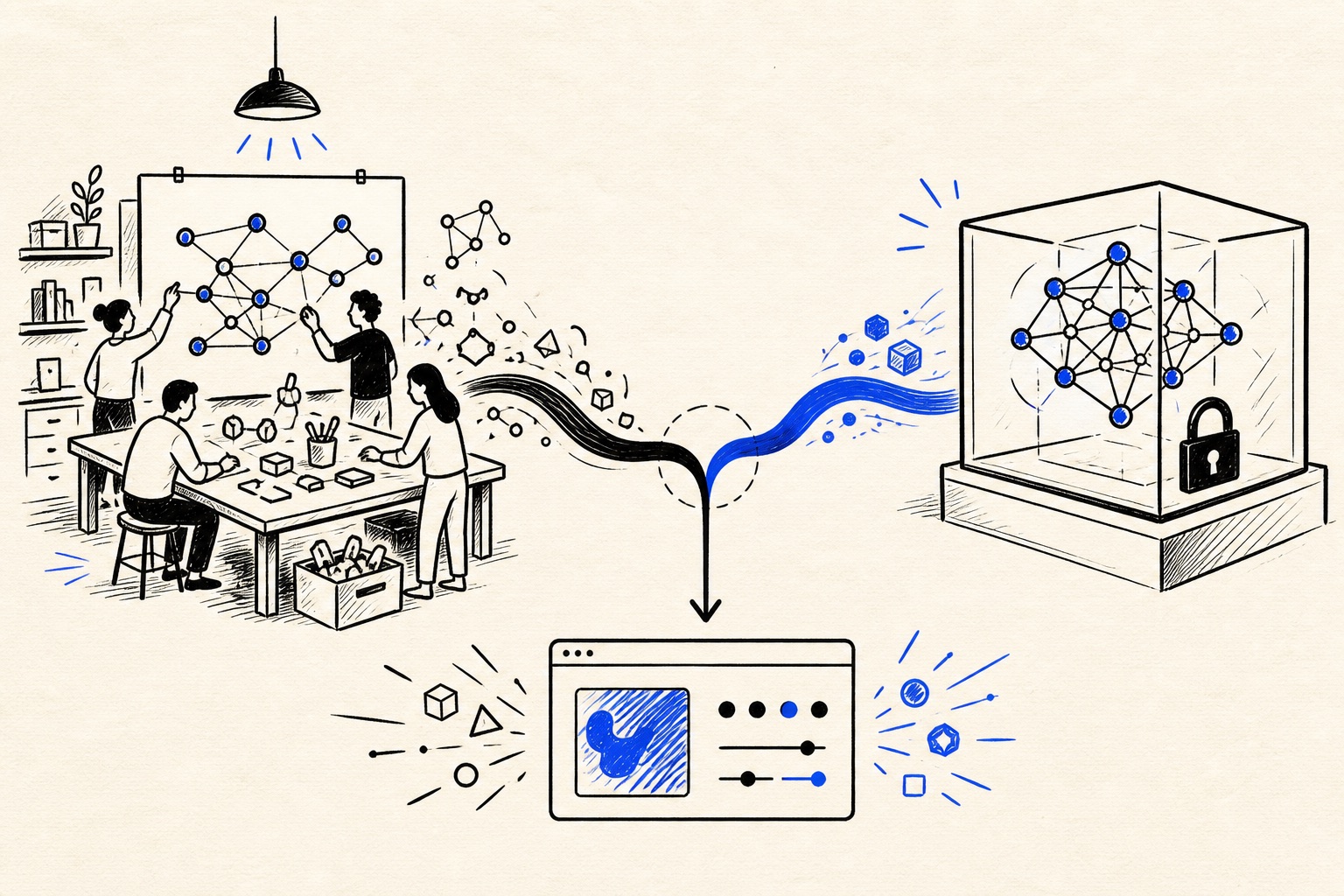
The discussion around open and closed models often becomes a proxy for broader beliefs about control, innovation and concentration. For a product team, the decision is more practical. It concerns the capability needed, the data that can be used, the operating burden the company can accept and the part of the experience it wants to own.
Both approaches can be useful. A closed service may provide fast access to powerful capability and managed reliability. An open model may offer more control over deployment, customization and cost. The mistake is to turn a strategic choice into an identity.
Capability is only one input
A model may lead on a general benchmark and still be a poor fit for a product with tight latency, privacy or cost requirements. Teams should begin with the task, the expected volume and the consequences of a bad answer. Those conditions determine whether a managed frontier model, a smaller private model or a mixed architecture makes sense.
The choice can also change over time. A team may begin with an external service to learn what customers value, then bring a narrow workload closer to its own infrastructure once the demand and requirements are clear. Strategy should leave room for that evolution rather than treating the first technical decision as permanent.
Control comes with operating responsibility
Running a model more directly can create control over data, behavior and deployment. It also creates responsibility for evaluation, security, monitoring and upgrades. A company should be honest about whether it has the people and process to carry that responsibility before treating self-hosting as an automatic advantage.
Managed services shift some of that burden to a provider, but they do not eliminate the need for product governance. The buyer still needs to test outputs, manage access and understand how a provider change could affect a customer experience. Control is not a switch. It is a collection of work that has to be owned somewhere.
Differentiation usually lives above the model
Most products will not be defensible because they selected one model before a competitor did. The more durable advantage comes from the workflow, the customer relationship, the proprietary context and the ability to improve the product through real operating feedback.
A healthy strategy therefore keeps attention on the whole system. Model choice matters, but it should support a product proposition that customers can recognize and a delivery model the company can sustain. The debate becomes clearer when the model is treated as an important component rather than the entire business.
Choose the model architecture that serves the product promise
Open and closed models offer different forms of speed and control. The right answer is the one that fits the customer task, the company’s operating capacity and the source of differentiation it expects to build over time.