The right to verify should become an AI product norm
People need a practical way to inspect important outputs, understand their basis and correct a system when the result affects their work, money or access to service.

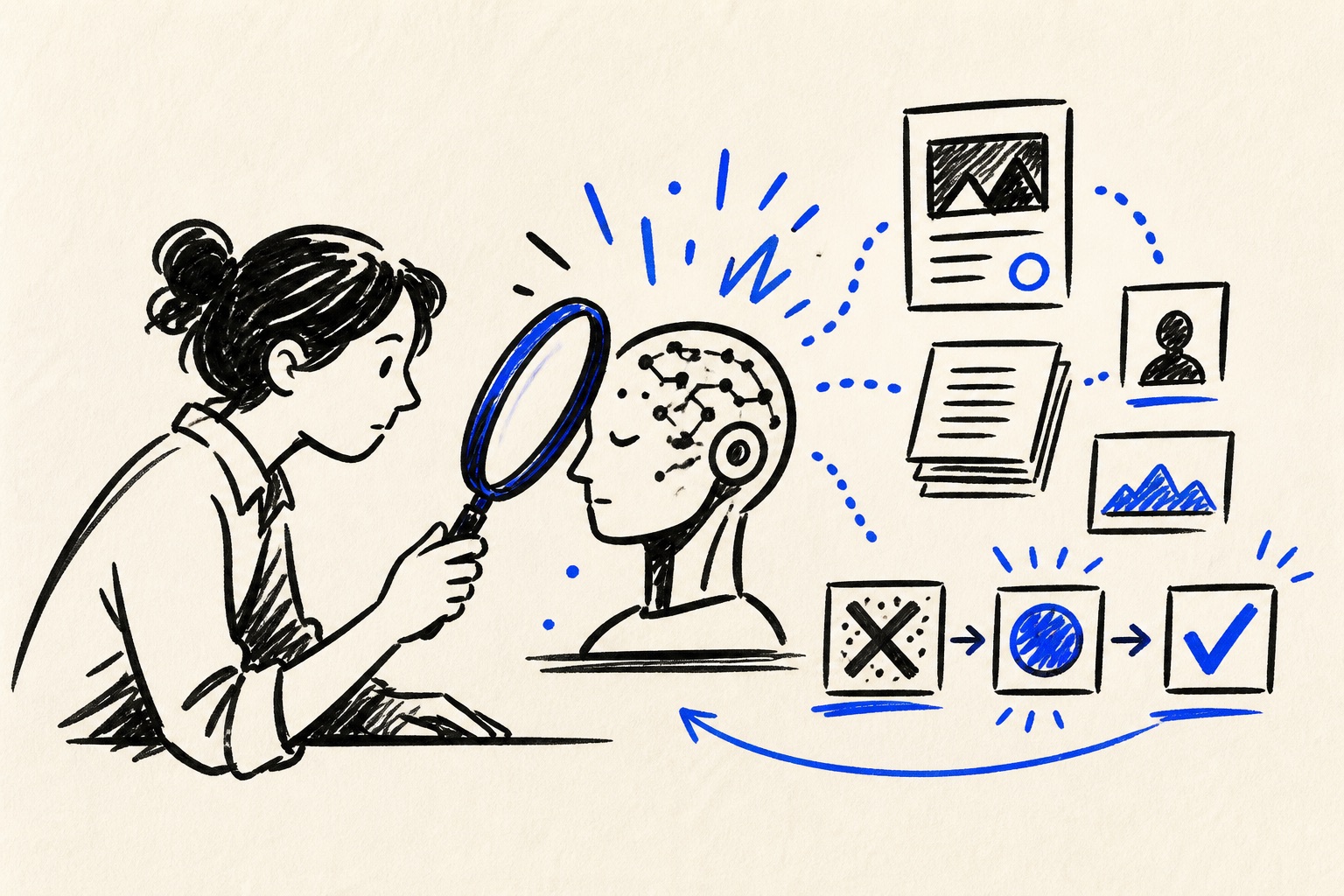
AI systems can make a recommendation, generate a summary or route a request in ways that appear smooth to the person receiving the result. Smoothness is not the same as accountability. When the outcome matters, people need a reasonable way to ask what information was used, whether the result can be challenged and who will take responsibility for a correction.
This is the right to verify. It is not a demand that every product expose its entire technical stack. It is a design principle that gives users enough evidence and control to act when an automated output affects something important.
Verification should match the consequence
A low-stakes suggestion may require only a simple indicator that the system is uncertain. A decision affecting a customer’s account, a worker’s evaluation or access to a service requires stronger evidence and a clear appeal path. The appropriate level of transparency depends on what the output can change in the real world.
Product teams should define these levels early. If they wait until a complaint, they may discover that the system retained too little information or that no one has the authority to revisit the result. Verification is easier to build into a workflow than to reconstruct after trust has been damaged.
Evidence needs to be understandable
A long technical log is not useful to most users. A meaningful explanation identifies the relevant source, the policy or rule applied and the next step available to the person. The design should help someone understand the result without requiring them to become an expert in machine learning or internal system architecture.
This can benefit the company as well. Clear explanations reduce unnecessary support contacts and reveal where a product is relying on weak information. When users can point to a specific reason they believe an output is wrong, the team receives better feedback than a general statement that the system feels unreliable.
Verification creates a healthier relationship with automation
People are more likely to accept an automated system when they know it can be questioned. The ability to verify does not make the product appear weak. It signals that the company understands the difference between assistance and unchallengeable authority.
That distinction will matter as AI enters more consequential work. Organizations that make correction easy will learn faster, recover from mistakes more effectively and create a more durable form of trust with the people who use their systems.
Trust grows when an important answer can be checked
AI products should make it possible to understand, question and correct consequential outputs. The right to verify is a practical standard for building systems that remain useful when the answer is uncertain or wrong.