The hidden signals in the AI semiconductor cycle
Chip shipments matter, but the more revealing indicators may be lead times, network readiness, memory supply and the behavior of customers after they receive the hardware.

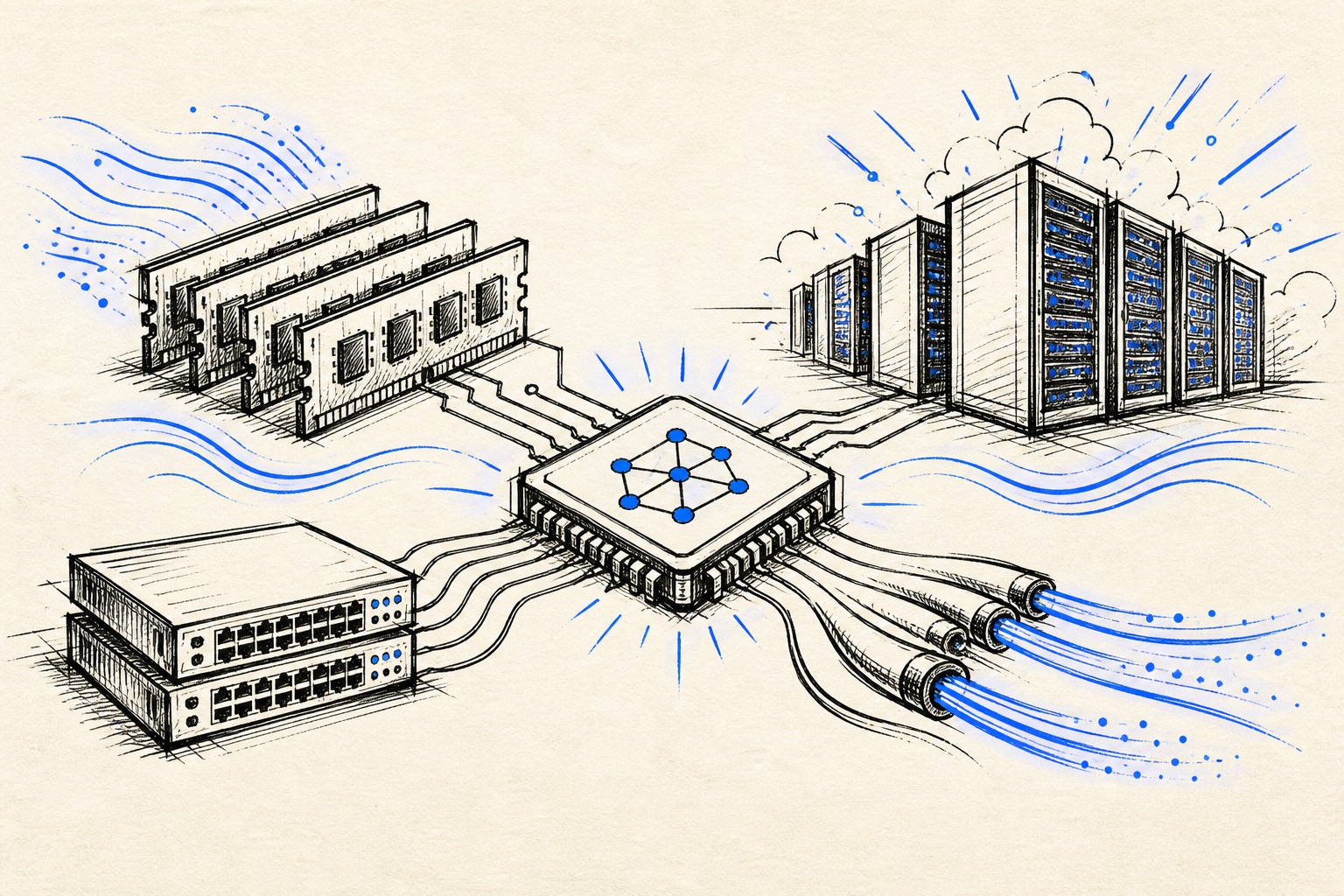
The AI semiconductor cycle is easy to narrate through chip demand, because chips are visible, scarce and central to the performance story. Yet a useful market view has to follow the system around the chip. Memory, networking, power equipment, packaging and customer deployment plans can each reveal whether demand is turning into productive capacity.
That broader view matters because semiconductor markets often move ahead of the applications they are meant to serve. A surge in orders can reflect real growth, prudent inventory building or fear of missing supply. The hidden signals help distinguish among those possibilities before the story reaches a quarterly earnings release.
Memory availability can limit the useful system
AI workloads depend on more than raw processor performance. Memory capacity and bandwidth shape which models can run, how quickly they respond and how efficiently a system can be used. A shortage or delay in the memory stack can slow a deployment even when the headline accelerator is available.
Investors should watch whether component supply is improving evenly across the system. A company may report strong chip shipments while customers still wait for the pieces required to build a functioning cluster. The difference between a component sale and a working installation can be material for both revenue timing and customer confidence.
Networking is an early test of deployment seriousness
Large AI clusters need high-capacity networks to operate efficiently. If the network fabric is incomplete, the hardware may be installed but underused. That makes orders for switches, optical components and related systems useful signals of whether a customer is building a complete environment or simply securing the most visible part of one.
The signal is not perfect, because network purchases can also be brought forward. It is valuable because it adds context. A customer that is investing across compute, memory and networking is more likely to be preparing a production platform than a customer whose activity is concentrated in one constrained component.
Lead times show where the real bottleneck has moved
When one supply constraint eases, another often becomes more important. Packaging capacity, electrical equipment, cooling systems and skilled installation crews can all become the pace-setting factor. The market should resist the urge to declare that a supply problem is solved simply because one headline lead time has improved.
A disciplined view follows the longest path to a commissioned workload. That path may begin in a fabrication facility, but it ends with an energized, networked and supported system that a customer can use. The bottleneck that matters is the one still standing at the end of that path.
Customer behavior after delivery will settle the debate
The ultimate question is what happens when buyers receive the equipment they ordered. Do they deploy it quickly, extend commitments and report new customer demand? Or do installations slow because the applications, power supply or operating teams are not ready? Those answers will tell the market more than order backlog alone.
This is why investors should pay attention to utilization commentary, deployment schedules and changes in customer capital plans. The strongest cycle is one where supply improvements unlock more productive use. The weakest is one where hardware arrives faster than the commercial work required to justify it.
The AI chip story is a systems story
Semiconductors will remain the headline, but the most durable insight comes from following the entire deployment chain. A healthy cycle is visible not only in chip orders, but in the supporting components, the commissioning pace and the customer workloads that appear afterward.