5 AI front-desk workflows local businesses can actually measure
The strongest first automation makes an urgent customer moment easier to capture, route or recover. It does not ask an owner to replace their operating model overnight.

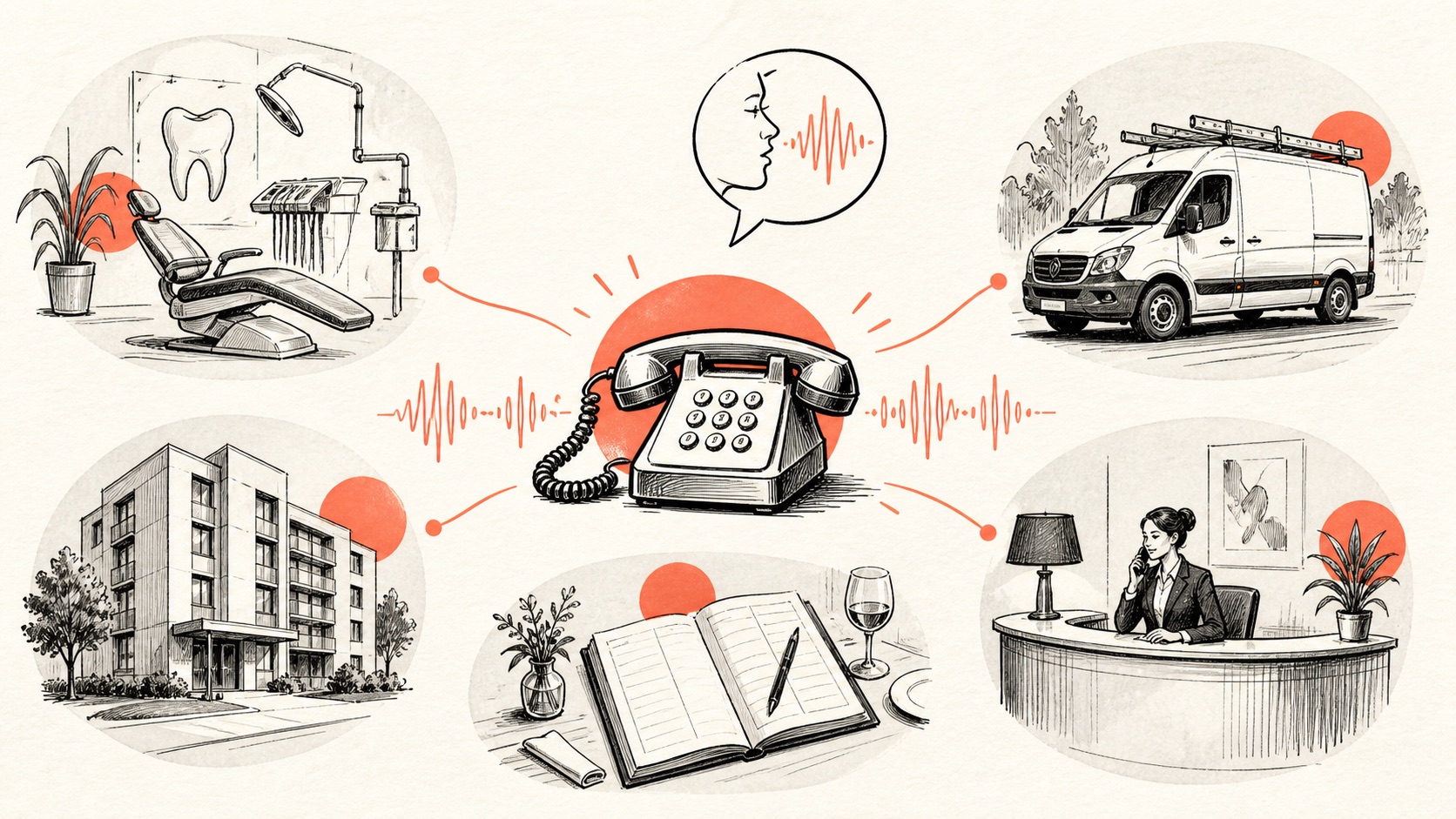
Local businesses do not buy an AI category. They buy a more reliable way to answer an enquiry, protect an appointment or follow up before intent disappears. That is why the first useful recommendation should be tied to one customer moment the owner already understands.
This guide ranks five front-desk workflows by buyer urgency, clarity of the first proof and how safely a human team can remain in control. It is the exact structure a commercial partner guide should use when a product is being introduced to an operator audience.
Three criteria before any recommendation earns its place
Does the workflow sit near an appointment, enquiry, sale or retained customer?
Can the owner hear, see or count the improvement inside the first week?
Can an exception reach a responsible person with context still intact?
This guide is a format demonstration. It includes no paid placement, affiliate link or guarantee of a financial result.
The breakdown at a glance
Ranked buyer guideMissed-call capture and qualification
A missed inbound call is a clear loss signal for home services, clinics, property teams and hospitality businesses. A constrained AI front desk can capture the caller name, service need, urgency and preferred callback window before sending the right context to staff.
Compare answered-call rate, qualified requests and booked follow-ups against the prior week.
Keep emergency, pricing and legal questions on an explicit human escalation path.
Speed-to-lead follow-up
Most local lead funnels fail between a form submission and the first useful response. A workflow can acknowledge the request, collect one or two qualifying details and offer an approved booking option while the prospect is still engaged.
Measure median first-response time, completed booking links and contact rate by lead source.
Do not let automation invent availability or make claims outside an approved offer.
No-show rescue and rescheduling
Appointment businesses already feel the cost of empty slots. A reminder and recovery workflow can confirm attendance, surface conflicts early and offer a waitlisted customer an approved alternative without adding more phone work for staff.
Track confirmation rate, recovered appointments and same-week filled cancellations.
The calendar remains the source of truth. Every booking change needs a clear owner.
Old-lead reactivation
A local business often has an overlooked list of enquiries that never received a timely second conversation. A narrow reactivation sequence can identify whether the need still exists, capture an update and place live opportunities back in a human queue.
Use a holdout group and compare replies, booked conversations and reported sales activity.
Use permission-aware lists and make opt-out frictionless across every channel.
After-hours policy and FAQ handling
Customers frequently call after business hours for simple answers about service areas, hours, documents or next steps. A system with a tightly approved knowledge base can remove waiting without pretending to resolve complex cases.
Measure deflected routine questions, next-day backlog and the share of conversations correctly routed.
Policies change. Assign a named person to own the source material and updates.
Lead with the customer moment, then earn the right to discuss the system.
A commercial guide converts best when it opens with a familiar operating leak, demonstrates the first proof, answers the obvious risk question and places a relevant product or service recommendation only after the reader can see the problem clearly.
Get the free 25 AI Offers guideGet the free 25 AI Offers field guide.
Practical starting points, buyer problems and offer angles for the AI economy. Download it now and get the next useful briefing.