AI agents change accountability before they change headcount
When a system can take several actions across tools, the first organizational question is who owns the decision path, the authority granted and the recovery when a result is wrong.

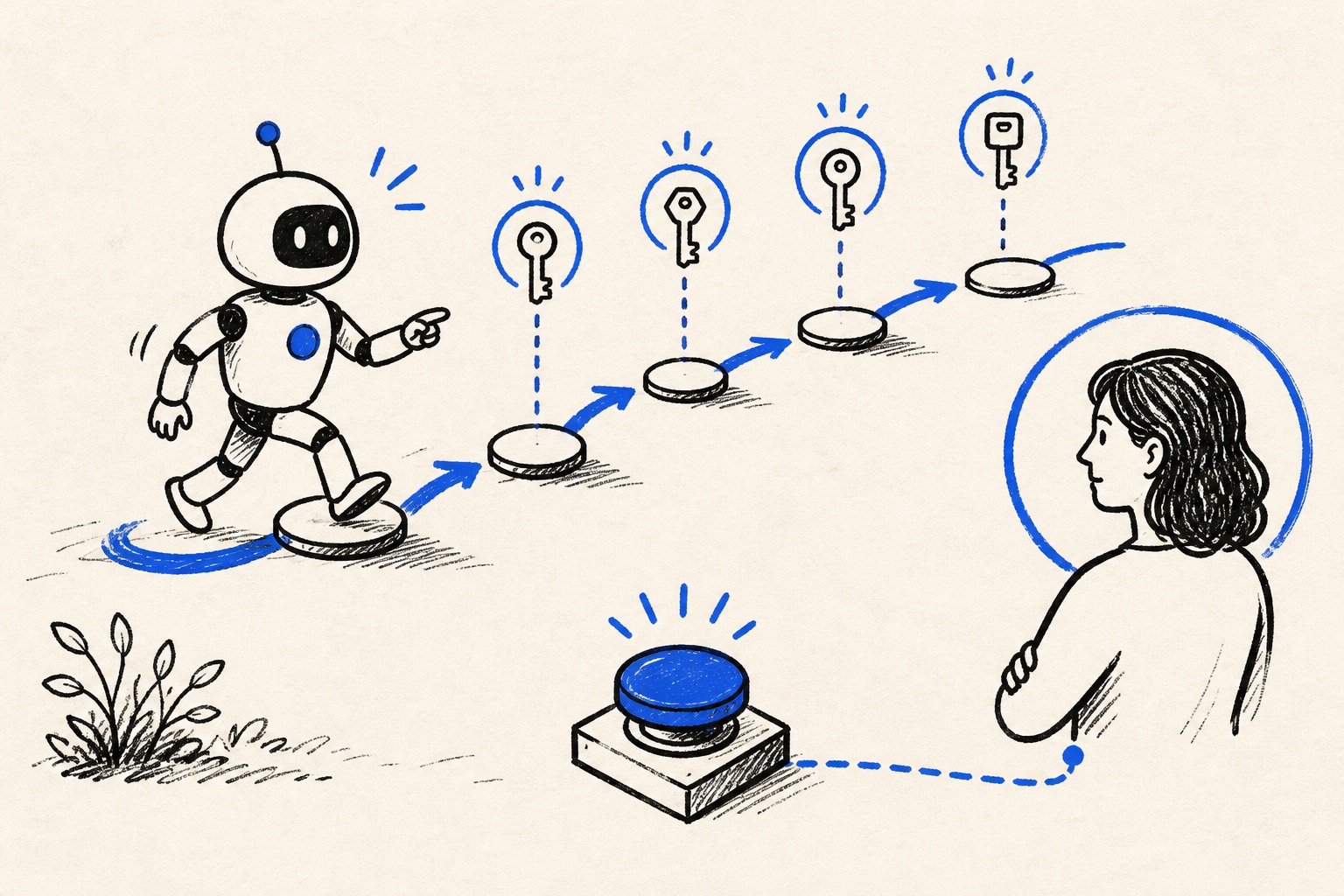
AI agents are often discussed in terms of autonomy and labor substitution. The more immediate organizational effect is a change in accountability. A system that can retrieve information, send a message, update a record and trigger another process creates a chain of actions that someone needs to design and own.
This is not merely a compliance question. It is a management question about authority. The organization has to decide what an agent is permitted to do, what evidence it needs before acting and how a human can understand or reverse the outcome.
Authority should be granted in small, observable steps
An agent does not need broad permission to be useful. It can begin by preparing a recommendation, drafting a response or completing a reversible action. As the team gathers evidence about quality and failure modes, it can decide whether to expand the agent’s role. This staged approach keeps responsibility clear and makes learning safer.
The alternative is to grant wide access because the full vision appears compelling. That can create a system that is difficult to audit and frightening to the people asked to work alongside it. Small, observable authority makes the agent easier to trust and easier to improve.
A chain of actions needs a chain of ownership
An agent may cross several business functions in the course of a task. It might use customer data, apply a policy, create a financial record and generate a communication. Each step can have a different owner, but the overall workflow needs someone responsible for the result. Otherwise a failure becomes a dispute between teams rather than a problem that can be fixed.
Designing this ownership is an opportunity to clarify the process itself. The organization can identify which rules are stable, where exceptions occur and where a human should always remain involved. The agent exposes the decision path that was often implicit when people performed the work manually.
Recovery should be designed before scale
A company should know how to stop an agent, undo an action, inform affected people and learn from the incident before the agent is allowed to act at meaningful scale. Recovery is not evidence that the system failed. It is evidence that the organization understands complex operations will sometimes need intervention.
The strongest agent deployments will make this capability visible to employees and customers. They will show that the organization has not delegated responsibility to a model. It has created a new tool within an accountable system that remains answerable to people.
Autonomy is valuable only inside an accountable system
AI agents can extend a team’s capacity, but they also make decision rights more explicit. The companies that define authority, ownership and recovery early will move faster with less confusion when their agents begin to act.