5 AI pricing models that align with customer value
Pricing works when the customer can connect the bill to a unit they understand and the provider can absorb normal variation in delivery cost.

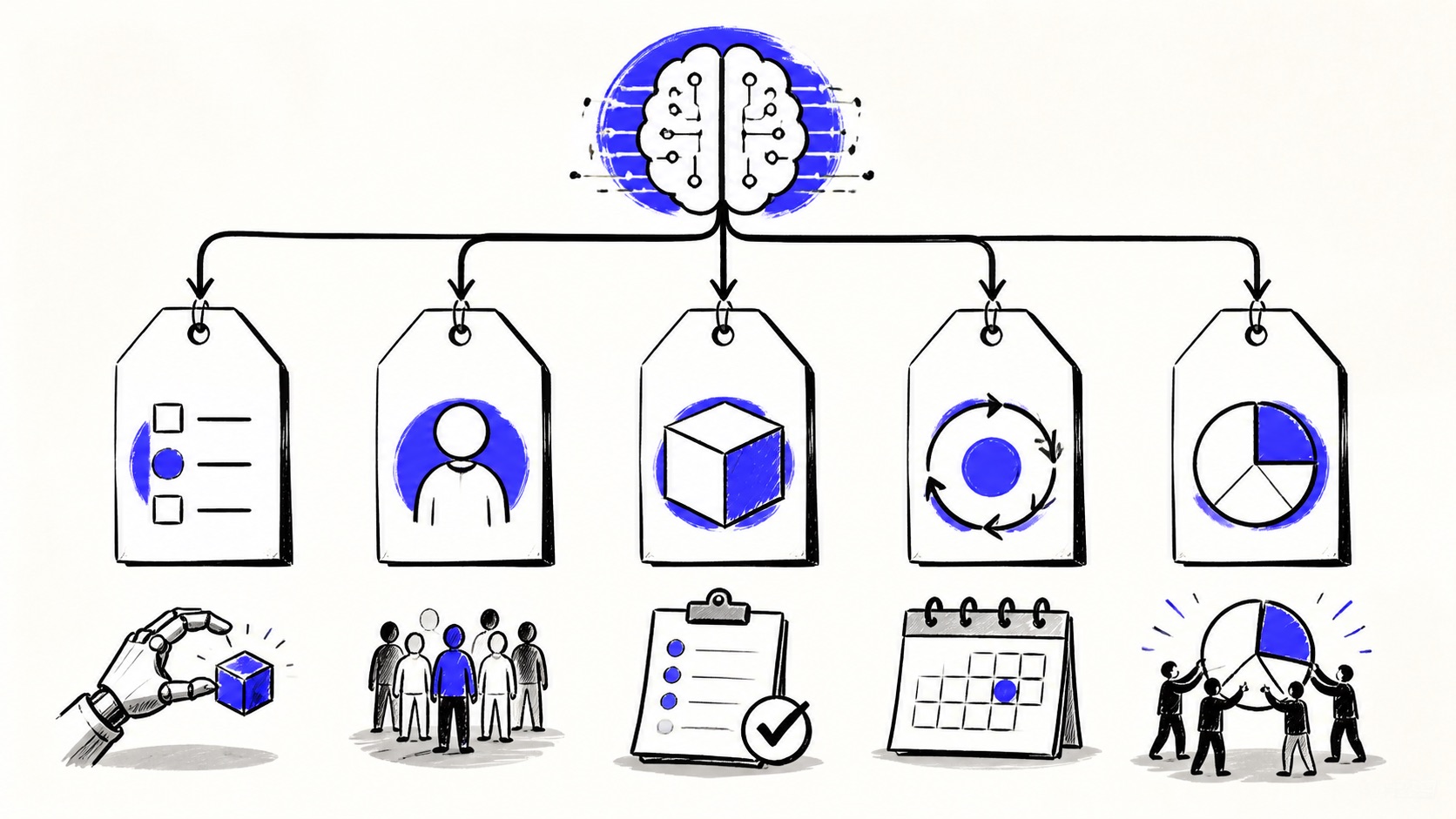
AI products often inherit seat or token pricing even when neither reflects the job the customer is buying. A better model balances simplicity, risk and the provider’s actual cost drivers.
We ranked these approaches by clarity, alignment and their suitability for an early business that still needs predictable cash flow.
Three tests for a useful opportunity
The problem already costs the customer time, money or missed demand.
A small demonstration can establish value before a full engagement.
The work can produce an ongoing service, data advantage or operating relationship.
This ranking is an editorial framework, not a forecast or promise of financial results.
The ranking at a glance
Five practical pathsFixed-scope implementation
Charge for a defined workflow, deliverable and acceptance process. The customer knows the commitment and the provider learns the real delivery cost before promising a broader relationship.
Scope changes need a written change process.
Platform fee plus usage band
A base fee supports service and infrastructure while usage bands accommodate growth without a surprise bill for every interaction. The unit should match a customer activity they can forecast.
Bands need clear overage treatment and visibility.
Per resolved outcome
Charge for a completed support resolution, qualified appointment or processed document that meets an agreed definition. The model aligns incentives when both parties can measure quality.
Disputes emerge quickly if the outcome definition is vague.
Managed service retainer
Bundle monitoring, improvement, support and a reasonable usage allowance into a monthly relationship. Customers buy operational reliability rather than access to a tool.
The retainer needs boundaries for custom work and exceptional volume.
Shared upside with minimum fee
Pair a baseline payment with a percentage of verified incremental value for mature, measurable workflows. The provider participates in success without financing the entire project.
Attribution, data access and payment timing must be agreed before launch.
Price the unit the buyer can defend internally
The strongest model gives the customer a predictable explanation of cost and gives the provider enough margin to support quality, monitoring and improvement.
Get the free 25 AI Offers field guide.
Practical starting points, buyer problems and offer angles for the AI economy. Download it now and get the next useful briefing.