The AI sales stack has an ownership problem
Sales teams are accumulating assistants, recorders and automation tools faster than they are deciding who owns the customer data, messaging and quality of the process.

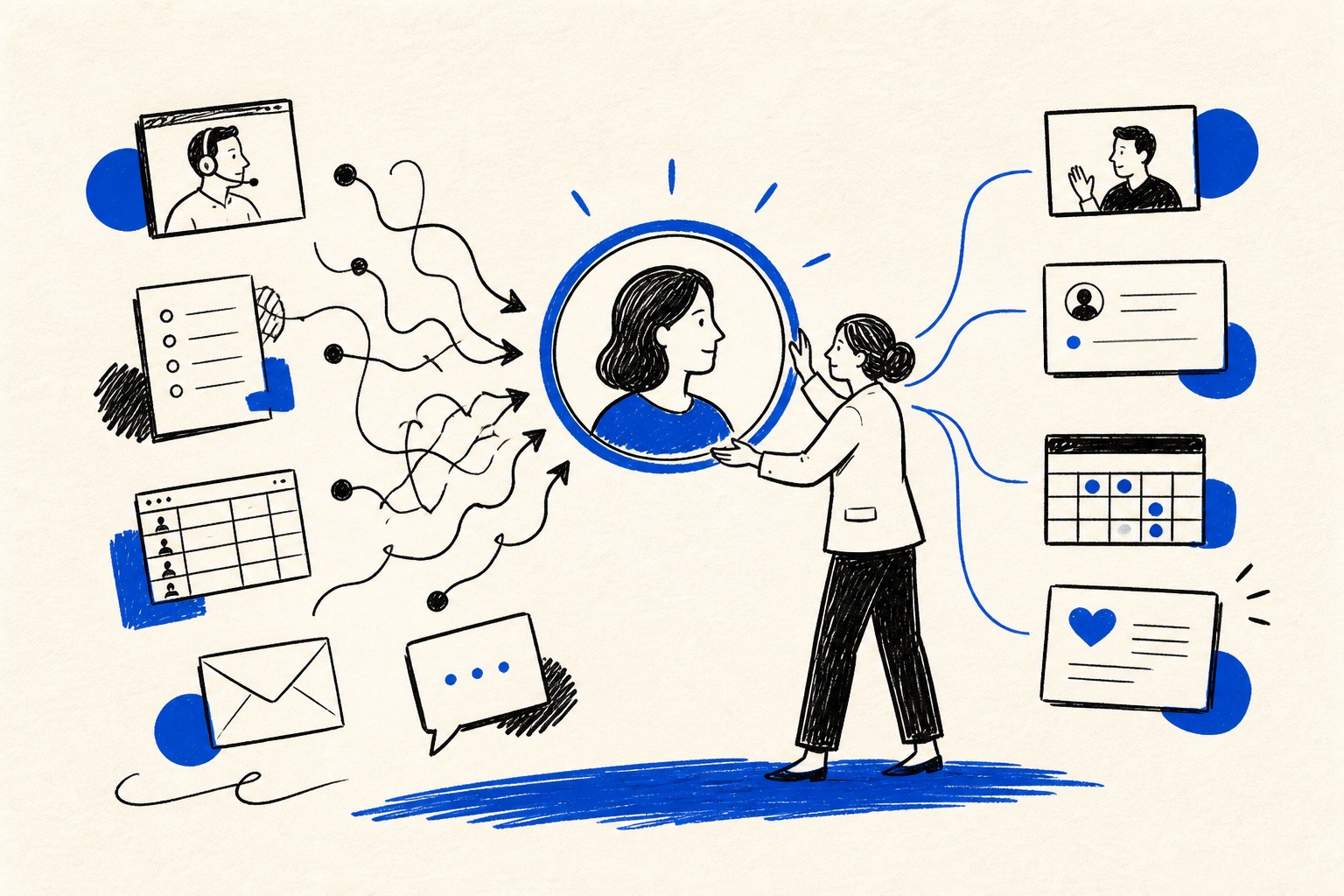
Sales is an obvious setting for AI because the work produces large amounts of structured and unstructured information. Calls, emails, notes, pipeline records and product questions all appear ready for automation. The difficulty is that each tool can create a slightly different version of the customer and of the process that is supposed to serve them.
The problem is not a lack of capability. It is a lack of ownership. A sales organization needs someone accountable for the quality of data, the claims that reach prospects and the points where automation should yield to a person who can make a real judgment.
More automation can create less shared context
A call intelligence tool may summarize a conversation differently from a prospecting tool that drafts the follow-up. A CRM assistant may classify an opportunity using a different signal from the manager reviewing the forecast. Each product can be useful in isolation while making the overall system harder to trust.
The response is to define a source of truth for the customer record and a small set of approved fields that guide action. AI can enrich that record, but it should not create a hidden parallel account of what happened. The operating system matters more than the number of assistants connected to it.
Message quality is a brand decision
Automated outreach makes it easy to increase volume. It also makes it easy to send language that is generic, poorly timed or inconsistent with a company’s actual product. The cost is not only a lower reply rate. It is the erosion of trust with the people a business hopes to serve later.
Sales leaders should treat prompts, approval rules and escalation paths as part of message governance. A useful AI system can prepare a relevant draft, surface evidence and help a representative follow through. It should not become an excuse to contact people without a clear reason or to imply certainty the company cannot support.
Managers need a better view of intervention
AI can help managers see which deals lack a next step, which objections recur and where a representative may need support. That is more valuable than simply scoring every call. The aim is to identify a useful coaching moment, not to build a surveillance layer that makes people optimize for the tool.
A healthy sales system preserves the human judgment that makes a customer relationship work. The manager should be able to question an AI signal, the representative should understand how recommendations are made and the customer should still be able to reach a person who can take responsibility for a commitment.
The sales stack should strengthen the customer record
AI can make sales work more prepared and responsive when it is governed around a shared account of the customer. Without that discipline, a collection of useful tools can become a costly source of inconsistent information and noisy outreach.