Customer experience is where AI has to earn forgiveness
Customers may accept an automated interaction when it saves time. They lose patience when it traps them, obscures responsibility or makes recovery harder after something goes wrong.

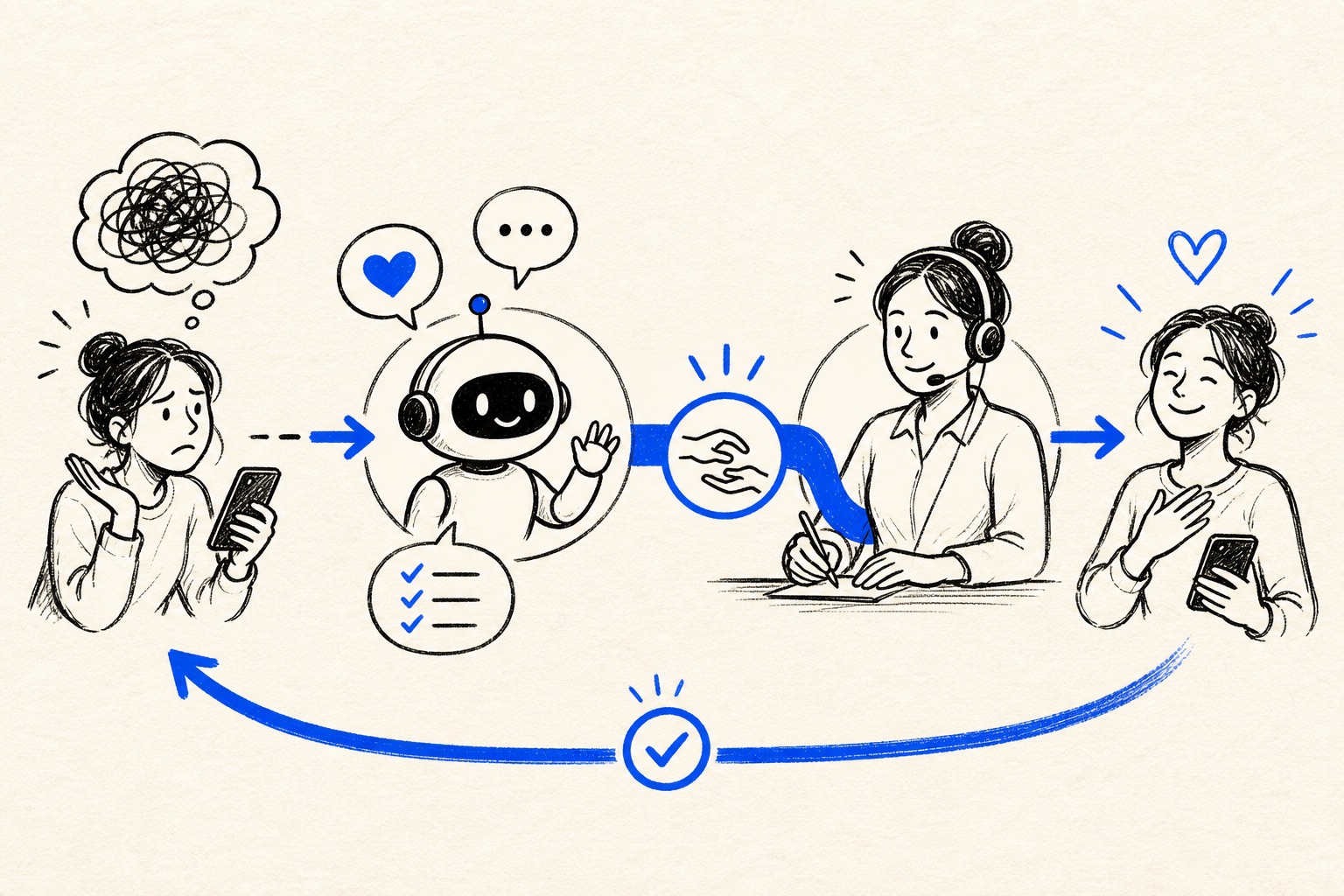
The promise of AI in customer experience is speed. A company can answer more questions, route more requests and make information available outside normal hours. That promise is real only when the automated path respects the customer’s time and knows when it has reached the edge of its authority.
The moment that defines trust is often the recovery moment. A customer who receives a poor answer, a mistaken charge or an urgent problem does not want another polished response. They want a clear route to someone who can understand the situation and make it right.
Self-service should make the simple case genuinely simple
The best automated experience removes a small friction that customers encounter repeatedly. It finds an order, explains a policy, updates a detail or prepares a request without forcing the person to repeat information they already provided. Those tasks create goodwill because the customer can feel the time returned.
The poorest experience makes a simple request harder by hiding the right option behind a conversational loop. Companies should measure whether the customer completed the task, how long it took and whether they had to contact support again. A fast response that produces a second contact is not a success.
Escalation is a product feature
An escalation path should not be treated as a failure of automation. It is part of the service design. A good system recognizes uncertainty, detects signs of frustration and transfers the relevant context to a person who can act. The customer should not have to start from the beginning once they reach human support.
This requires an honest view of what the model can and cannot handle. Product teams need to define the cases that demand a specialist, the information the specialist needs and the authority they have to resolve the problem. The handoff is where a company proves that the customer is more important than the efficiency metric.
Recovery data can improve the whole operation
Every failed interaction contains information about the product, policy or service process. If a company only counts containment, it may miss the patterns that cause customers to seek help in the first place. AI can help organize that evidence, but someone needs to own the decision to change the underlying problem.
The organizations that build trust will use automation to make recovery faster and learning more systematic. They will ask which issue should never have reached support, which response needed a human and what the customer experienced after the handoff. That is a more valuable loop than simply expanding the number of requests a bot can close.
Customers remember whether the company took responsibility
AI can make service feel more available and less repetitive. It earns trust when it also makes the difficult moments easier to resolve, with a clear human owner who can act when the system cannot.