Human escalation is the core of AI service design
An AI system earns trust not by avoiding every difficult case, but by recognizing when a person needs to take over with the right information and authority.

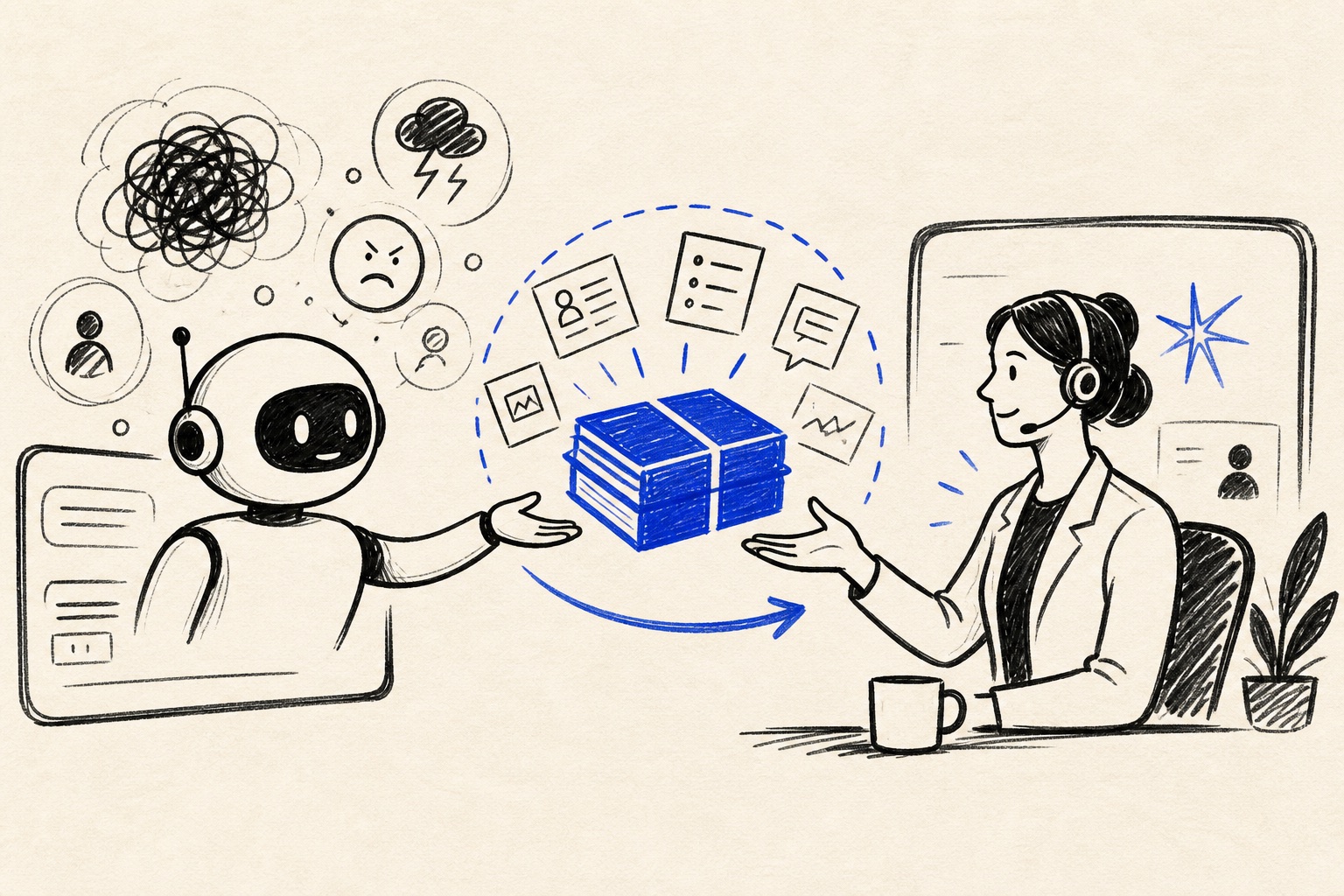
A well-designed AI service should not aim to contain every request. It should aim to solve the routine case efficiently and make the difficult case easier for a person to resolve. That distinction changes the design of the product, the training of the team and the metric a company uses to judge success.
Escalation is often treated as a cost. In many important workflows, it is the evidence that the system understands its limit and values the customer’s outcome more than a narrow automation rate.
The handoff should preserve the story
Customers become frustrated when they have to repeat a problem after an automated interaction. The system should pass along the request, the information already collected, the steps taken and any uncertainty it detected. The human then begins with context rather than a blank screen and can focus on judgment or recovery.
This requires integration across the service workflow, not simply a button labeled contact support. The escalation should arrive at the right team with the right priority. A missed urgency signal can turn a useful self-service system into a delay that damages trust.
People need authority, not just visibility
A human representative cannot resolve an escalation if they can only observe what the AI did. They need the ability to correct a record, make an exception within policy or route the issue to a specialist who can act. The organization should define that authority deliberately so the handoff is not another queue with no power to solve the problem.
Training matters here as well. Employees need to understand the system’s capabilities, its common failure patterns and how to document an override. That knowledge turns escalation into a learning signal rather than a private workaround that disappears after the case is closed.
The measure is resolved trust, not containment
A company can report a high containment rate while customers quietly give up, return later or leave with a poor impression. The more useful measures include successful resolution, repeat contact, customer effort and the quality of the outcome after escalation. These show whether the whole service worked, not merely whether the AI ended the conversation.
The strongest teams will review escalations for patterns. They will ask which requests should have been handled automatically, which should always reach a person and what changes in policy or product could prevent the issue from occurring at all. The service improves when the handoff is treated as valuable evidence.
The human handoff is where a service shows its values
AI should make ordinary requests easier and serious problems clearer. A thoughtful escalation design protects both the customer and the organization, then turns difficult moments into a better next version of the service.