Knowledge worker AI is a redesign of the day, not a single task
The value of AI appears when a person can connect research, drafting, decision-making and follow-through into a better rhythm of work rather than collecting isolated productivity tricks.

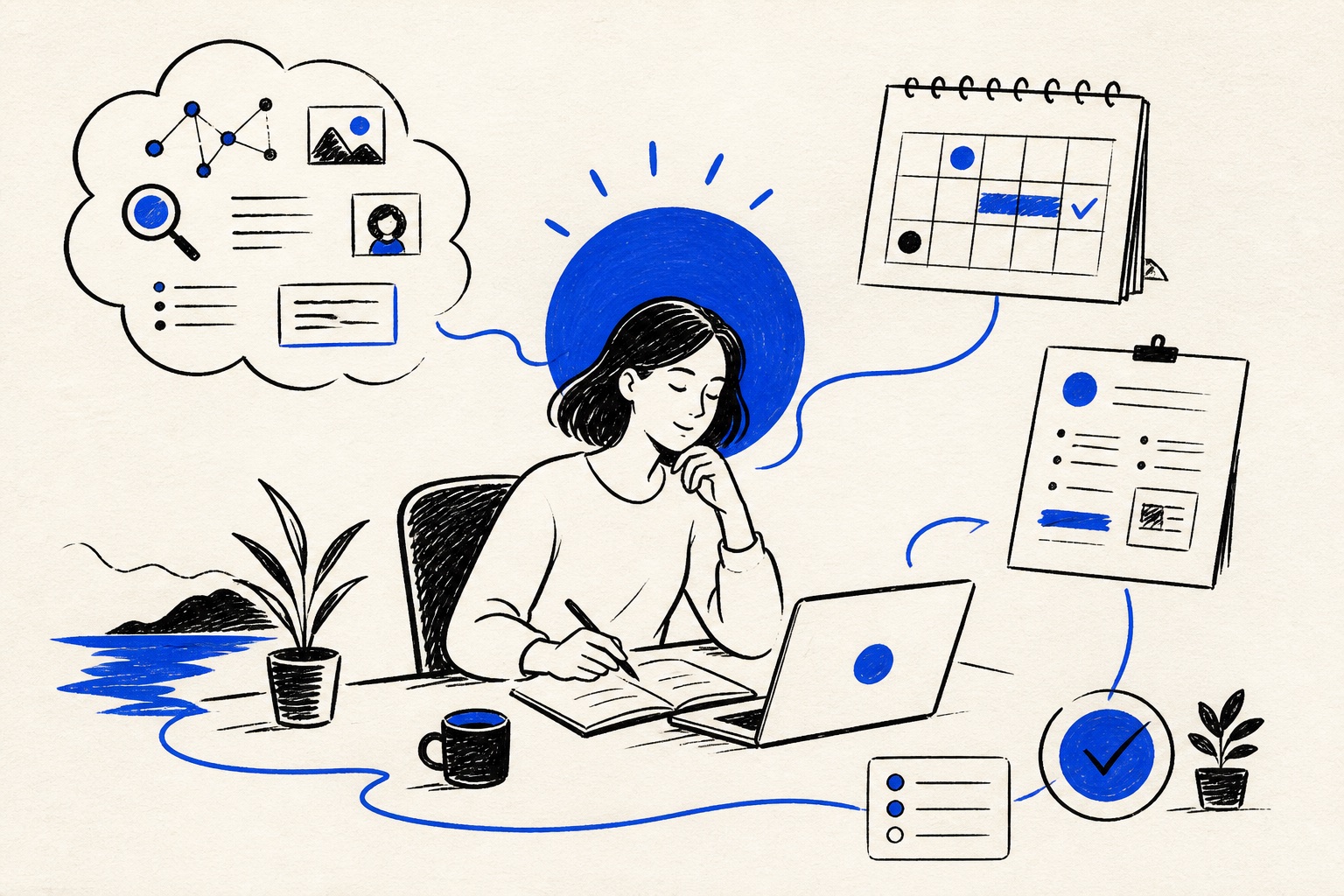
Knowledge workers have been offered a growing collection of AI features: summarize this meeting, draft that email, analyze this file. Each can save time. The deeper opportunity is to redesign the sequence of the day so information moves more cleanly from question to decision to action.
That requires more than individual prompting skill. It requires teams to agree on what a good brief looks like, where decisions are recorded and how work should be handed off after an AI-assisted draft is complete.
The day begins with a better view of priorities
AI can help assemble context from calendars, project records, messages and prior decisions. The useful result is not a longer summary. It is a clearer view of what requires attention, what can wait and which commitments need a next step. This can reduce the mental cost of reopening work after meetings and interruptions.
The system should support judgment rather than replace it. A person still needs to decide what matters most and whether the available information is enough. The benefit is that the raw context is easier to gather and compare before the day fills with reactive work.
Drafting should lead to a decision, not more text
AI can make it easy to produce documents that look finished before the underlying decision is clear. Teams should design templates that ask for the key choices, evidence and unresolved questions first. The draft then becomes a vehicle for alignment rather than a polished way to postpone the real conversation.
This is especially important for management work. A useful brief should help someone decide, approve, challenge or act. If the output does not make the next decision easier, more generated text may simply increase the amount of material people have to read before getting to the point.
Follow-through is where the time savings become real
A meeting summary is only useful if commitments move into a system where they can be owned and revisited. AI can help extract actions, prepare a follow-up and surface the decisions that should be communicated. The workflow needs a clear destination for that work, otherwise the summary becomes another document that nobody opens again.
The best redesign connects the entire chain. Research informs a decision, the decision creates a commitment and the commitment remains visible until it is complete. AI can make each transition easier, but the organization has to decide what it means for work to be truly finished.
The productivity gain comes from a more coherent operating rhythm
AI can improve a knowledge worker’s day when it reduces the friction between context, judgment and follow-through. The real advantage is not more output. It is fewer important decisions lost between one task and the next.